
Bangkok’s September Flood: How Extreme Rain Overwhelmed a Major City
Thailand’s September flood has affected nearly three million people, overwhelmed parts of one of Asia’s biggest cities and disrupted everything from neighborhood streets to auto plants and air cargo. The useful part for the rest of us is figuring out where the system failed — and what can be done before the water reaches the door.
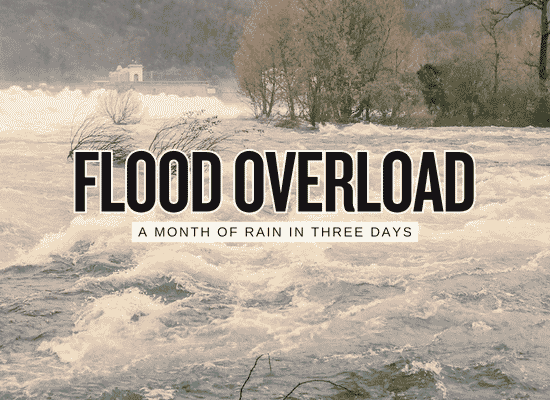
I’ve watched enough floods over the years to know the worst damage does not always start with a river coming over its banks. Sometimes it starts with a drainage system that simply runs out of room. That is what makes the flooding in Thailand worth paying attention to. Bangkok took roughly a month’s worth of September rain in a matter of days, while runoff from farther north continued moving into the country’s central plain. Streets filled, neighborhoods went under, employees could not get to work, freight backed up and pumps were left fighting a water problem much larger than the block they were sitting on.
For homeowners and businesses elsewhere, that is the important lesson. Flood risk is not just about whether a property sits beside a river. It is about how much water arrives, how quickly it arrives and whether there is somewhere for it to go.
What Actually Happened
The problem was the concentration, not merely the monthly total.
Bangkok received roughly 320 mm of rain late in the week — close to the amount the city normally receives during the entire month of September. Thailand’s meteorological service recorded 230.5 mm, or about 9.1 inches, at one Bangkok monitoring location on September 25 alone.
The weather pattern was straightforward but potent. An active low-pressure area crossed central Thailand while a monsoon trough sat across the country and the southwest monsoon strengthened. The result was repeated heavy and very heavy rainfall over already wet areas.
At the same time, runoff moving south from northern Thailand added pressure to the central region. By September 30, authorities reported flooding across 195 districts, 1,196 subdistricts and 8,249 villages.
329,000 Bangkok households were listed as affected in the September 30 government situation report. The city’s water level was described as stable, while water was still rising in a number of surrounding and upstream provinces.
The Flood Was Bigger Than Wet Houses
Getting to the airport became part of the problem
Bangkok’s main airport remained operational, but flooded roads and staffing problems caused cancellations, delays and a large baggage backlog. A facility can stay dry and still lose function when its workforce cannot reach it.
Four Toyota facilities stopped production
Flooding interfered with parts deliveries, temporarily stopping operations at three Toyota plants and a joint-venture facility. That is a useful reminder that supply-chain flood exposure often sits miles away from the factory gate.
Thai Airways suspended cargo operations
The flood reached beyond passenger inconvenience. Cargo activity was suspended as staffing and ground access were disrupted, creating another link in the economic chain.
Billions of baht moved into emergency relief
The Thai government approved roughly 4.1 billion baht in emergency funding for flood victims while longer-term drainage and diversion projects moved back into focus.
Where the System Was Vulnerable
| Pressure Point | What Thailand Showed | What Property Owners Should Notice |
|---|---|---|
| Rainfall intensity | A month’s worth of rainfall was compressed into only a few days. | Annual and monthly averages can hide the real danger. Short, intense accumulation is often what overwhelms local drainage. |
| Drainage capacity | Pumps and canals were working while rainfall and upstream water continued arriving. | A clear drain is useful, but even a functioning drainage system has a limit. Know where water goes after it leaves your property. |
| Low elevation | Bangkok sits on a low delta and has a long-running land-subsidence problem. | A few inches of elevation can matter. Lowest-floor height, driveway slope and neighboring grades deserve more attention than most buyers give them. |
| Road access | Workers, supplies and passengers had trouble reaching otherwise operating facilities. | Your house or business does not have to flood to become inaccessible. Check the low spots on every practical evacuation route. |
| Utilities | Flooding created power, sanitation and household-access problems. | Electrical panels, HVAC equipment, generators, water heaters and stored valuables are often positioned lower than they need to be. |
| Recovery time | Water lingering after the rain stopped continued creating damage. | Water removal is only the first job. Wet building material becomes a second problem very quickly. |
Six Lessons Worth Bringing Home
Watch the 24- and 48-hour rainfall forecast, not just the storm name.
A tropical storm hundreds of miles away may receive the headlines, but repeated ordinary-looking thunderstorms over one drainage basin can produce the bigger local flood problem.
Find the property’s lowest entry point before the weather turns bad.
Walk the house. Garage doors, patio sliders, crawlspace vents and low thresholds are common first-entry locations. Measure their height against the surrounding grade instead of guessing.
Move expensive equipment vertically.
Electrical equipment, tools, appliances, documents, inventory and electronics stored six or twelve inches higher can make a surprisingly large difference in a shallow flood.
Know whether water can leave your neighborhood.
A clean gutter does not help much if the street drain is submerged or the receiving ditch, canal or creek is already full. Local drainage is a connected system.
Plan for access failure, not just building damage.
Thailand’s factory and airport disruptions are a good example. Employees, deliveries and emergency services may lose access long before water reaches a building.
Treat the first 48 hours after flooding as part of the emergency.
EPA guidance recommends drying flooded materials as quickly as possible, ideally within 24–48 hours. Floodwater may contain sewage, chemicals and other contaminants, so cleanup is not simply a matter of pumping the room dry.
A Better Pre-Flood Checklist
If Water Has Already Entered
Look for structural and electrical hazards. Do not touch wet electrical equipment or enter standing water where electrical sources may still be energized.
Contact your insurer when practical and photograph rooms, water lines, damaged materials and belongings before major cleanup changes the scene.
Remove standing water and wet materials and begin drying as quickly as conditions safely allow. Materials left wet beyond this period commonly develop mold.
EPA guidance says fuel-powered portable generators should be operated outside and at least 20 feet from buildings, away from doors, windows and vents. Carbon monoxide cannot be seen or smelled.
Reporting & guidance used for this FloodMart report
Thailand Department of Disaster Prevention and Mitigation / Government Public Relations Department — situation reports, September 28–30, 2026.
Thai Meteorological Department — heavy-rain advisories and weekly rainfall summary, September 2026.
Reuters and Associated Press — Bangkok flooding, nationwide impacts, airport disruption, industrial shutdowns and government flood relief, September 27–30, 2026.
World Bank — Bangkok flood-risk and land-subsidence research.
U.S. Environmental Protection Agency and National Flood Insurance Program / FloodSmart — flood cleanup, mold, generator and insurance guidance.
Flood Pressure Test
This quick check is not a flood forecast. It is designed to flag the same types of weaknesses that became obvious in Thailand: concentrated rain, low elevation, poor drainage, previous flooding and limited preparation.