
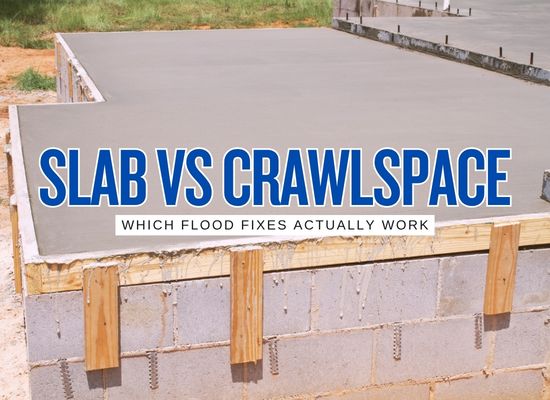
Flood mitigation starts under the house. A slab home, crawlspace home, and raised home can sit on the same street and need three different upgrade plans. The slab needs water kept away from low openings. The crawlspace needs water pressure relieved and moisture controlled. The raised home needs the living floor protected while the space below is allowed to flood safely.
The foundation decides the playbook
Generic floodproofing advice gets homeowners in trouble because the same upgrade can be smart for one foundation and almost useless for another. Flood vents can be critical for crawlspaces and lower enclosures, but they do not solve a low slab door. Garage barriers can help a slab home during shallow runoff, but they do not fix a crawlspace with trapped hydrostatic pressure. Raising utilities helps almost every foundation, but the best location and cost depend on the house.
Best upgrades by foundation type
| Foundation | Best first upgrades | Often overrated | Decision rule |
|---|---|---|---|
| Slab on grade | Grading, downspout extensions, garage threshold protection, door barriers, water sensors, raised utilities. | Random sandbags, interior sealants, sump gear without a collection path. | Keep water away from the slab edge and low openings. |
| Crawlspace | Flood vents, wet floodproofing, utility elevation, drainage, crawlspace sump, moisture monitoring, debris cleanup plan. | Sealing vents shut in flood-prone areas, finishing crawlspace storage, ignoring standing water. | Let floodwater equalize safely, then dry the space quickly. |
| Raised home | Proper flood openings below, elevated utilities, breakaway or compliant lower walls, no finished storage below, access hardening. | Turning the lower level into finished space, blocking vents, storing valuables underneath. | Protect the living floor and design the lower area to get wet without major loss. |
Slab homes need exclusion and drainage. Crawlspaces need pressure relief and drying. Raised homes need safe flood passage below the living floor.
Slab homes: upgrades that actually fit
01Fix grading before buying gadgets
A slab home has little vertical margin. If the yard, patio, driveway, or side path sends water toward the house, the first upgrade is usually grading, swales, surface drains, or runoff redirection.
02Protect the garage like a flood door
The garage is often the widest and lowest opening. Use a better bottom seal, threshold review, driveway drainage, removable garage barrier, and raised storage. A sensor just inside the door can catch the first water.
03Stage door and patio barriers for shallow water
Door shields and temporary barriers can help when the problem is short-duration shallow water. They are not a solution for deep flooding, fast-moving water, or foundation-level pressure.
04Raise utilities and appliances off the lowest floor
Water heaters, HVAC components, electrical equipment, washers, dryers, and garage appliances can be damaged by a few inches of water. Elevation platforms and relocation can reduce repeat losses.
Crawlspace homes: upgrades that actually fit
01Use flood openings correctly
Flood openings help water move in and out so pressure does not build against crawlspace walls. This is a foundation-protection upgrade, not a contents-protection upgrade. The space below still needs to be treated as flood-exposed.
02Remove vulnerable storage from below
Crawlspaces are tempting storage zones, but floodwater, mud, mold, pests, and hidden moisture can ruin contents. Use the crawlspace for access and building function, not valuables.
03Elevate ducts, water heaters, wiring, and HVAC
Crawlspace utilities are often the most expensive weak point. Relocate or raise equipment above expected flood levels where practical, and use flood-resistant materials below the design flood elevation.
04Plan for drainage and drying after water exits
A crawlspace that floods and then stays damp can create mold, rot, odor, insulation damage, and pests. Add access, moisture monitoring, sump or drain strategy where appropriate, and a post-flood drying plan.
Raised homes: upgrades that actually fit
01Keep the living floor above the real risk level
A raised home works when the lowest living floor is high enough. Confirm the elevation, flood zone, Base Flood Elevation, freeboard rules, and insurance pricing before assuming the house is safe.
02Do not finish the lower enclosure like living space
The lower area under a raised home should usually be treated as wet-risk space. Parking, access, and limited storage are different from finished rooms, drywall, flooring, cabinets, office space, or bedrooms.
03Use compliant openings or open foundations below
Enclosures below elevated homes need proper flood openings where required, and coastal or fast-flow areas may need open foundations, breakaway walls, or more specialized design. Blocking vents or sealing the lower level can increase damage.
04Raise utilities, stairs, and access planning too
A raised floor is not enough if HVAC, electrical panels, water heaters, stairs, lifts, ramps, fuel tanks, and storage remain exposed. Access after a flood matters for older residents, repairs, and emergency response.
Upgrade fit table
| Upgrade | Slab home | Crawlspace home | Raised home |
|---|---|---|---|
| Grading and downspouts | Excellent First defense against water reaching low openings. | Excellent Reduces crawlspace entry and dampness. | Useful Protects access, lower enclosure, and utilities. |
| Garage or door barriers | Excellent Strong fit for shallow runoff and low thresholds. | Situational Helpful only if doors are the entry point. | Limited Useful for lower enclosure only, not living-floor protection. |
| Flood vents | Poor fit Slab homes usually have no crawlspace pressure zone. | Excellent Key pressure-relief upgrade when designed correctly. | Excellent Critical for enclosed areas below elevated floors. |
| Utility elevation | Excellent Protects garage and low mechanical equipment. | Excellent Often one of the highest-value crawlspace moves. | Excellent Prevents the lower level from becoming the weak point. |
| Sump pump and water alarm | Situational Needs a collection point or interior drain logic. | Strong Helpful for low crawlspace water and warning. | Situational Useful for lower enclosure or utility zones. |
| Dry floodproofing | Limited Can help shallow entry points but risky if water gets deep. | Often wrong Sealing can trap pressure against crawlspace walls. | Often wrong Lower areas should usually relieve water pressure. |
| Wet floodproofing | Limited Does not protect finished slab living space. | Strong Fits flood-exposed crawlspace design. | Strong Fits compliant lower enclosures below raised floors. |
| Full house elevation | Major project Possible but expensive and site-specific. | Major project Can be rational after repeated losses. | Already partly solved Verify enough elevation and fix lower-level weaknesses. |
Foundation flood upgrade selector
Use this tool to match the first flood mitigation move to the foundation type and weak point. It is a planning aid, not an engineering report, permit decision, insurance quote, or floodproofing guarantee.
Score logic: foundation type, water threat, flood history, utility exposure, budget, and exposed value are combined into a practical upgrade signal. Higher scores mean the first upgrade should be chosen carefully before more money is spent.
Upgrade mistakes by foundation
| Foundation | Mistake | Better move |
|---|---|---|
| Slab | Buying interior water alarms while the driveway still drains into the garage. | Fix exterior flow first, then add sensors as backup. |
| Slab | Relying on door barriers for deep or fast water. | Use barriers only for shallow, short-duration water and keep insurance current. |
| Crawlspace | Closing vents to keep water out and accidentally increasing pressure risk. | Use properly designed flood openings where floodwater must pass through. |
| Crawlspace | Leaving ducts, wiring, insulation, and mechanical systems low. | Elevate or protect utilities and use materials that can recover after wetting. |
| Raised home | Turning the lower enclosure into finished space because the house feels elevated. | Keep lower areas flood-tolerant, vented, and limited to lower-value uses. |
| Raised home | Ignoring stairs, ramps, lifts, tanks, HVAC stands, and access after water recedes. | Treat access and utilities as part of the flood system. |
The final foundation checklist
| Question | Slab answer | Crawlspace answer | Raised-home answer |
|---|---|---|---|
| Where does water touch first? | Garage, door, patio, driveway, slab edge. | Vents, crawlspace wall, low point, utility bay. | Lower enclosure, stairs, utility platform, access route. |
| What fails fastest? | Low threshold or bad exterior drainage. | Pressure, standing water, hidden moisture. | Improper lower enclosure or low equipment. |
| Best cheap move? | Downspouts, grading cleanup, sensor, garage storage lift. | Sensor, debris cleanup, vent check, moisture monitoring. | Remove valuables below, check vents, raise low equipment. |
| Best mid-cost move? | Garage barrier, surface drain, patio correction, utility platform. | Flood openings, crawlspace drainage, utility elevation. | Compliant openings, utility relocation, lower-enclosure hardening. |
| Best major move? | House elevation, drainage redesign, floodwall where suitable. | Elevation, crawlspace rebuild, utility relocation. | More elevation, open foundation retrofit, major access redesign. |
Slab homes should fight water outside. Crawlspace homes should let water pressure equalize and dry fast. Raised homes should keep living space high and make the lower area sacrificial, compliant, and low-value.