
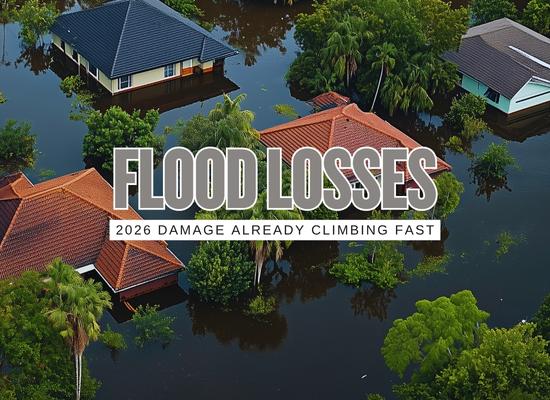
Flood losses are still developing, but the year has already produced one major billion-dollar candidate, multiple regional flash-flood emergencies, widespread home and infrastructure damage, and a fresh reminder that flood risk is no longer limited to coastal surge zones.
Running total picture
The full national damage total for 2026 flooding is not final yet. That matters because flood costs often take months to settle. Public infrastructure inspections, FEMA assistance, private insurance claims, NFIP claims, business interruption, road repairs, agricultural losses, and local debris removal can all develop after the water has gone down.
Still, the early picture is serious. Hawaii’s Kona Low flood disaster alone has been estimated above $1 billion. The Gulf Coast flood episode tied to Tropical Storm Arthur damaged homes and businesses across Louisiana and Mississippi, while the late-June Ohio Valley and Mid-South flooding brought water rescues, washed-out roads, and community-level disruption across several states.
Hawaii’s March Kona Low flooding is the clearest 2026 flood event with a public damage estimate above the billion-dollar mark.
Property analytics placed nearly 100,000 properties inside the storm flood footprint, with close to one-fifth sustaining damage.
Parts of Louisiana reported extreme rainfall totals, with more than 100 homes flooded in some hard-hit communities.
Repeated thunderstorm rounds created major flash flooding, water rescues, impassable roads, and washed-out roadways.
Major 2026 flood events by damage signal
The table below separates confirmed dollar estimates from impact indicators. That distinction keeps the report accurate while still showing which events are likely to matter most to homeowners, insurers, lenders, contractors, public works teams, and local governments.
| Event | Primary states or areas | Damage signal | Reported impacts | Cost status |
|---|---|---|---|---|
| Hawaii Kona Low floods | Hawaii, Oahu, Maui, Molokai, Lanai | $1B plus estimate | Homes, roads, schools, farms, businesses, public infrastructure, evacuations, rescues, dam concerns, and widespread mud and debris | Best documented billion-dollar flood candidate so far |
| Southern California New Year flooding | San Diego area | Hundreds displaced | Record-setting rainfall, shelter evacuation, water rescues, road closures, travel disruption, and burn-scar debris-flow concerns | Damage total still fragmented across local impacts |
| Michigan spring flooding | Northern Michigan, central Michigan, Upper Peninsula | Statewide impact | Flood watches across much of the state, local emergencies, road closures, residential damage reports, and dam concerns | Public loss picture still developing |
| Gulf Coast flood episode from Arthur remnants | Louisiana, Mississippi, Alabama, Florida Panhandle, Texas | Severe regional flooding | More than a foot of rain in some areas, more than 20 inches in parts of Louisiana, flooded homes, stranded vehicles, dam monitoring, and at least one Mississippi fatality | Likely costly, but no complete public total yet |
| Kentucky and Ohio Valley flash flooding | Kentucky, Indiana, Illinois, Missouri | Water rescue event | Three-day rainfall totals up to 12 inches, numerous water rescues, impassable roads, washed-out roads, and river flooding | Damage assessment still ongoing |
Sharp damage readout
These are the major flood-loss signals that stand out so far. The numbers are intentionally practical. They show the kind of losses that turn a flood from a weather story into an insurance, recovery, and public-budget problem.
- 01 Hawaii moved the 2026 flood total immediately The Kona Low flooding stands out because the damage estimate crossed the billion-dollar threshold and touched multiple asset classes at once. Roads, schools, homes, farms, businesses, and public facilities all entered the recovery picture.
- 02 Property exposure was massive before final claims arrived Nearly 100,000 properties were identified inside the Hawaii flood footprint. Even if only a portion of those properties suffered serious damage, the exposure base was large enough to create a major insurance and recovery event.
- 03 The Gulf Coast showed the cost of rainfall without a major hurricane Tropical Storm Arthur was not a classic high-end hurricane landfall, but its moisture still produced serious flash flooding. That is an important lesson for property owners who focus only on wind category and overlook rainfall totals.
- 04 Louisiana and Mississippi damage included homes and infrastructure Reports from the Gulf event included flooded homes, businesses taking water, stranded vehicles, downed trees, road closures, and dam monitoring. Those categories usually spread costs across homeowners, local governments, utilities, insurers, and transportation agencies.
- 05 Kentucky and the Ohio Valley became a road and rescue story The late-June event involved repeated thunderstorm rounds, high rainfall rates, water rescues, and washed-out roads. These are the losses that may not always appear as one clean national headline, but they are expensive locally.
- 06 Urban flooding remained a hidden-cost problem San Diego’s flooding showed how a relatively compact storm can create shelter evacuations, flooded roads, swift-water rescues, airport disruption, and burn-scar concerns. In urban areas, drainage limits can turn a short rainfall burst into a costly event.
- 07 Final dollar totals will likely rise after inspections Flood damage is often undercounted early because public infrastructure, private contents, mold remediation, vehicle losses, small-business closures, crop impacts, and uninsured losses take time to document.
Hawaii’s billion-dollar flood lesson
Hawaii is the clearest high-dollar flood event of the year so far. Two Kona Low storm systems delivered prolonged rain, flash flooding, landslides, road washouts, and damage across several islands. The public damage estimate moved above $1 billion, and property analytics showed a large flood footprint across Oahu, the Big Island, Maui, Molokai, and Lanai.
Damage categories
The Hawaii event affected homes, small businesses, farms, vehicles, schools, roads, public facilities, and utility systems. That mix matters because it spreads recovery across private insurance, federal aid, local budgets, state agencies, nonprofits, and household savings.
Insurance angle
Large flood footprints reveal the gap between mapped risk and real damage. Many properties outside the highest-profile flood zones can still experience floodwater, mud, drainage backups, slope runoff, or access loss. For homeowners, the event is a reminder that flood insurance should not be viewed only as a coastal or riverfront product.
Recovery pressure
Island recovery has extra cost pressure because debris removal, road repair, materials, temporary housing, contractor availability, and logistics can be more complicated than in many mainland markets. That can turn physical damage into a longer and more expensive rebuild cycle.
Gulf Coast rainfall damage without a headline hurricane
The June Gulf Coast flood episode is a strong example of how rain-driven losses can build without a major hurricane category attached to the event. The storm environment produced flash flood emergencies, stranded vehicles, flooded homes and businesses, downed trees, road problems, and dam monitoring.
Parts of Louisiana reported rainfall totals above 20 inches, and communities such as Plaucheville and Moreauville saw more than 100 homes flooded. Mississippi also faced serious flooding, including evacuations near Anchor Lake Dam and a weather-related death during cleanup operations.
Ohio Valley and Mid-South flash flood belt
The late-June flood event across parts of Indiana, Kentucky, Illinois, and Missouri was driven by repeated rounds of heavy thunderstorms. The National Weather Service summary for the Paducah forecast region described 3 to 12 inches of rainfall, numerous water rescues, countless impassable roads, washed-out roads, and minor to moderate river flooding in parts of southwest Indiana.
This kind of event is difficult for households and local governments because the damage is scattered. One block may see basement flooding, another may lose road access, another may need culvert repairs, and another may face vehicle loss. The total cost can be substantial even before a clean regional dollar estimate is available.
| Loss type | Cost driver | Who usually pays first | Hidden expense |
|---|---|---|---|
| Washed-out roads | Roadbed repair, culverts, bridges, barricades, engineering, labor | County, city, state, FEMA public assistance if eligible | Longer commutes, emergency access delays, business disruption |
| Flooded homes | Dryout, demolition, electrical repair, flooring, walls, contents | Homeowner, flood insurer, disaster aid if eligible | Mold, temporary housing, uninsured contents |
| Vehicle flooding | Total loss, towing, storage, replacement transportation | Auto comprehensive coverage if carried | Lost work time and replacement vehicle price shock |
| Business interruption | Closed roads, flooded inventory, employee access, cleanup | Business owner, commercial insurer if covered | Lost customers and delayed reopening |
| Drainage system failure | Blocked culverts, undersized pipes, debris, pump limits | Local government or drainage district | Repeat flooding during the next storm |
Flood damage cost bands for 2026 events
Because not every 2026 event has a final public damage number, the most useful way to read the year so far is by cost band. Hawaii is already in the billion-dollar conversation. Other events sit in the high-impact local or regional category until public assistance, insurance claims, and infrastructure assessments mature.
| Cost band | 2026 flood examples | Damage profile | Reader note |
|---|---|---|---|
| $1 billion plus | Hawaii Kona Low floods | Multi-island property damage, public infrastructure, homes, farms, roads, businesses, schools, and recovery logistics | Most important confirmed flood-cost marker so far |
| $100 million to $1 billion potential | Large regional flood episodes still under assessment | Widespread homes, roads, public works, vehicles, commercial losses, and local infrastructure | Final cost depends on claims, FEMA eligibility, and public infrastructure assessments |
| $10 million to $100 million local clusters | Urban flooding, county-level road washouts, smaller flash flood corridors | Street flooding, basements, vehicles, culverts, small businesses, drainage repairs | Often financially painful even if the event never becomes a national headline |
| Underreported household losses | Uninsured and underinsured homes outside mapped high-risk zones | Contents loss, drywall, flooring, appliances, temporary housing, mold, cleanup | Many losses never appear in a clean disaster total |
Insurance and homeowner takeaways
The 2026 flood pattern is especially relevant for homeowners because it shows multiple flood pathways. Coastal storms are only one part of the picture. Heavy rainfall, urban runoff, drainage failure, river rises, dam stress, landslides, and burn-scar debris flow can all create flood damage.
- 01 Rainfall flood risk deserves its own insurance review Homeowners often check hurricane wind coverage and forget floodwater. A rain-driven flood can damage a house even when there is no major hurricane landfall.
- 02 Mapped risk does not catch every loss Flash flooding and drainage failure can hit outside the areas people usually think of as flood zones. That makes private flood quotes and NFIP options worth reviewing even for moderate-risk properties.
- 03 Infrastructure damage can become a household cost A washed-out road, failed culvert, damaged bridge, or closed access route may not flood the living room, but it can still interrupt work, school, medical access, and business income.
- 04 Uninsured contents can become the painful gap Flood cleanup is not only about walls and flooring. Furniture, appliances, stored items, vehicles, tools, and business inventory often drive real out-of-pocket pain.
- 05 Documentation now can save money later Photos, receipts, elevation records, flood vent details, equipment location, prior mitigation work, and drainage notes can make claims and future quote reviews much easier.
Flood Damage Cost Reality Checker
This tool helps estimate the household-level cost of a flood event. It is not an insurance quote or claims estimate. It is designed to show how quickly damage can climb once water enters a structure.
Enter the affected area and choose the damage conditions to estimate a rough loss range.
The estimate is intentionally broad. Real flood losses depend on water type, contamination, drying speed, building materials, labor costs, local permits, insurance terms, and whether electrical, HVAC, or structural systems were affected.
Regions to watch next
The 2026 flood year is still active. The next damage totals may come from tropical rainfall, Midwest thunderstorm complexes, Western burn-scar storms, monsoon flash flooding, or repeated urban drainage events. Homeowners and local officials should be watching both headline storms and smaller repeated events that quietly add up.
| Region | Flood pressure | Damage concern | Preparedness move |
|---|---|---|---|
| Gulf Coast | Tropical moisture, stalled storms, storm surge, drainage overload | Homes, vehicles, roads, small businesses, pump systems, low-lying neighborhoods | Review flood insurance before storm formation, not after watches appear |
| Ohio Valley and Midwest | Training thunderstorms, river flooding, saturated soil | Basements, roads, bridges, culverts, farms, small-town infrastructure | Inspect drainage, sump systems, culverts, and local road access routes |
| Western states | Atmospheric rivers, burn scars, debris flow, hillside runoff | Mud, debris, road closures, homes below slopes, utility disruption | Monitor burn-scar alerts and keep evacuation routes clear |
| Island and coastal communities | Intense rain, limited road networks, steep terrain, coastal flooding | Logistics costs, access delays, infrastructure stress, high repair costs | Prepare for longer recovery timelines and supply constraints |
Bottom line for the 2026 flood year
The damage total for 2026 flooding is still being written, but the early markers are already meaningful. Hawaii has produced a billion-dollar-scale flood disaster, Gulf Coast communities have seen extreme rain and home flooding from a relatively early tropical system, and inland regions have faced flash flooding severe enough to wash out roads and trigger water rescues.
The year’s strongest lesson is that flood damage is becoming more geographically diverse and harder to summarize with one number. Homeowners need coverage clarity. Local governments need drainage and road resilience. Insurers need better property-level data. And communities need to treat heavy rainfall as a primary hazard, not a secondary detail behind wind.