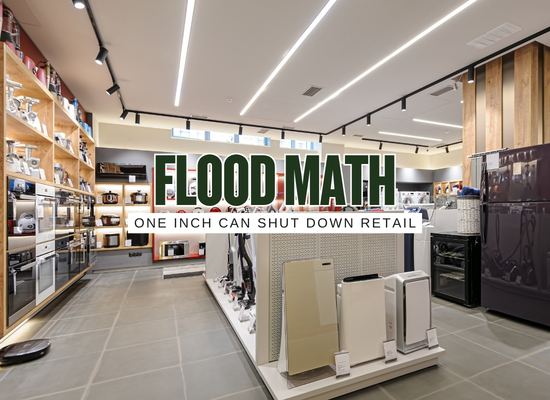
One inch of water sounds manageable until it reaches the bottom shelf, the electrical outlets, the point-of-sale wiring, the drywall line, the storage closet, the stockroom, and the customer entrance. For a retail business, the water itself is only the first problem. The bigger hit often comes from lost selling days, ruined inventory, cleanup labor, safety delays, deductible math, uninsured interruption, and the awkward restart period when the store is technically open but customers are not fully back yet.
A shallow retail flood is not a shallow financial event. One inch of water can touch the most expensive parts of a store faster than owners expect: inventory, low electrical runs, fixtures, packaging, point-of-sale equipment, flooring, drywall, tenant improvements, employee schedules, and the customer confidence needed to reopen profitably.
The one inch chain reaction
Retail flood losses are often underestimated because people picture water depth instead of business interruption. A store can avoid structural collapse and still lose a week of sales, a season of merchandise, a refrigeration line, a cash drawer, a customer entrance, and the confidence of staff who have to return to a wet building.
The damage pattern usually falls into four buckets. First comes direct physical damage to building materials and fixtures. Second comes merchandise loss, especially for products stored in cardboard, fabric, paper, electronics packaging, food packaging, cosmetics, apparel, pet supplies, home goods, books, and seasonal goods. Third comes operating loss from closure days, reduced foot traffic, staff scheduling, canceled appointments, and delayed deliveries. Fourth comes the insurance and cash-flow gap, which can be the most painful part if the owner assumed flood, contents, and interruption all worked together automatically.
Retail losses that start below the knee
1Bottom shelf inventory
Retailers often store fast-moving stock low because it is easy to reach and easy to replenish. That creates a hidden flood exposure. Even a thin layer of water can ruin products that never fully submerge if packaging absorbs moisture, cartons wick water upward, or labels and barcodes become unreadable.
2Customer-facing fixtures
Gondolas, endcaps, slatwall bases, checkout queue displays, refrigerated cases, shelving feet, floor signage, and promotional bins may need cleaning, drying, inspection, or replacement. A fixture that looks fine can still hold moisture behind panels or under base trim.
3Point-of-sale and low-voltage systems
Card readers, network cables, floor boxes, scanner bases, power strips, security pedestals, camera wiring, and back-office routers can become shutdown triggers. If the store cannot safely take payment, reconcile inventory, or connect to the network, the door may stay closed even after the floor is dry.
4Drywall, baseboards, and flooring
One inch of standing water can wick into baseboards, drywall paper, insulation, laminate seams, subfloor edges, and wall cavities. The visible waterline may be low, but the moisture path can be higher than expected.
5Stockroom blind spots
The sales floor gets attention first, but many retail losses are hiding in the back. Stockrooms often have stacked cartons, return bins, damaged-goods areas, printer stations, employee lockers, cleaning chemicals, floor drains, and shared utility walls.
The shutdown math behind a shallow flood
The store does not need deep water to face a deep loss. A practical estimate should include at least five numbers: daily gross sales, closure days, gross margin, inventory exposed near floor level, and the insurance recovery delay. The mistake many owners make is only counting the cleanup invoice.
| Loss category | Retail example | Owner math | Common miss |
|---|---|---|---|
| Lost sales | Store closed for cleanup, inspection, drying, restocking, or landlord repairs | Daily sales multiplied by closure days | Counting only full closure and ignoring soft reopening days |
| Lost gross profit | Revenue is gone, but product cost and margin tell the earnings hit | Lost sales multiplied by gross margin | Confusing revenue loss with profit loss |
| Inventory damage | Bottom shelf goods, boxed stock, seasonal displays, return bins | Exposed inventory multiplied by damage percentage | Assuming packaging damage is not merchandise damage |
| Cleanup and drying | Water extraction, disposal, fans, dehumidifiers, sanitation, testing | Vendor invoice plus internal labor and disposal fees | Skipping documentation before disposal |
| Fixtures and systems | Displays, shelving, flooring, POS, low-voltage wiring, refrigeration checks | Repair or replacement cost plus inspection delays | Ignoring low electrical and network dependencies |
| Insurance gap | Deductibles, limits, exclusions, uncovered interruption, claim timing | Total loss minus expected recovery | Assuming flood coverage and business interruption are bundled |
Retail flood shutdown calculator
This estimator is built for fast planning, not claim settlement. It shows the difference between visible cleanup cost and the wider shutdown exposure that can hit a retail location after shallow water intrusion.
Calculator logic: lost gross sales equals full closure sales plus soft reopening sales reduction. Lost gross profit applies the selected margin. Total event exposure combines lost gross profit, inventory damage, cleanup, repair, and fixture costs. Estimated recovery applies the selected coverage percentage to physical losses after the deductible, not to lost sales unless a separate applicable policy exists.
Insurance confusion that hurts retail owners
Flood insurance can be a lifesaver, but retail owners need to read the policy stack carefully. A standard commercial property policy may not cover flood. A separate flood policy may cover building and contents, but that does not automatically mean the store has flood-related business interruption coverage. A tenant may also discover that the landlord insured the building while the tenant still carries responsibility for inventory, fixtures, improvements, and operations.
| Policy question | Retail reason | Document to review |
|---|---|---|
| Flood listed as covered cause of loss | The store may have property coverage but still lack flood coverage | Commercial property declarations and exclusions |
| Contents and inventory limits | High-value stock may exceed contents coverage during peak season | Flood policy declarations and inventory sublimits |
| Business interruption for flood | Lost income may not be covered by a flood policy | Business income endorsement and flood exclusions |
| Tenant improvements | Flooring, built-ins, counters, lighting, signage, and interior finishes may sit between landlord and tenant responsibility | Lease, property policy, and tenant policy |
| Waiting periods and claim timing | The cash gap may arrive before reimbursement | Policy conditions and claim handling instructions |
| Cleanup documentation | Photos, invoices, damaged inventory lists, disposal records, and moisture readings can affect recovery | Claim instructions, adjuster requests, and internal incident file |
11 retail flood costs owners often miss
A retail shutdown estimate becomes more realistic when the owner separates obvious losses from quiet losses. The following items are easy to overlook during the first walkthrough.
- ① Damaged packaging: Some products remain physically intact but become unsellable because boxes, barcodes, labels, or seals were contaminated or softened.
- ② Disposal labor: Ruined merchandise still has to be counted, photographed, removed, and discarded safely.
- ③ Off-site storage: Surviving inventory may need temporary storage while the store dries out.
- ④ Emergency shipping: Restocking quickly can raise freight costs, especially for seasonal or promotional goods.
- ⑤ Staff downtime: Employees may be paid for cleanup, inventory counts, customer calls, and reopening prep even while sales are stopped.
- ⑥ POS recovery: Payment systems, scanners, printers, routers, cameras, and security equipment may need testing before reopening.
- ⑦ Permits and inspections: Electrical, fire, health, building, and landlord inspections can extend closure.
- ⑧ Customer communication: Signage, email, social posts, local ads, and phone updates become part of the reopening cost.
- ⑨ Soft reopening drag: Sales may remain below normal after reopening because customers assume the store is still closed or partially stocked.
- ⑩ Lease friction: Responsibility for flooring, walls, common-area drainage, storefront barriers, and access points may be disputed.
- ⑪ Future premium pressure: A flood claim or location-specific exposure may affect renewal questions, deductibles, or mitigation requests.
The first 48 hours after water gets in
The first two days often decide whether the event stays contained or becomes a longer shutdown. The goal is not to rush employees into unsafe cleanup. The goal is to move quickly in the right order: safety, documentation, stabilization, professional drying, claim communication, and reopening control.
- Secure the site before cleanup begins. Do not let staff walk into standing water around electrical systems, damaged shelving, contaminated water, unstable materials, or unknown chemical exposure.
- Photograph everything before moving it. Capture waterlines, entry points, inventory, damaged fixtures, flooring, exterior drainage, stockroom conditions, and serial numbers for equipment.
- Separate salvageable stock from questionable stock. Put customer safety and brand trust ahead of saving marginal merchandise.
- Start a single event file. Keep photos, vendor invoices, employee cleanup hours, disposal receipts, customer notices, landlord messages, and insurance notes in one place.
- Bring in qualified drying and electrical help when needed. Retailers should not guess on hidden moisture, energized equipment, food safety, medical products, cosmetics, or refrigerated inventory.
- Control the reopening message. Reopen only when the sales floor, staff areas, payment systems, restrooms, entrances, and emergency exits are safe and functional.
Prevention upgrades with retail payback logic
The best mitigation plan starts with the cheapest losses to prevent. A store may not be able to solve regional flooding, but it can often reduce the chance that shallow water becomes a full business interruption event.
| Upgrade | Best fit | Retail payoff | Planning caution |
|---|---|---|---|
| Raise bottom shelf clearance | Apparel, books, electronics, cosmetics, specialty food, home goods | Reduces first-inch inventory damage | Check accessibility, merchandising visibility, and fixture stability |
| Water-resistant stock bins | Backrooms and seasonal storage | Protects cartons and labels from floor-level water | Inventory still needs rotation and airflow |
| Door and storefront flood barriers | Street-level shops, strip centers, malls with exterior doors | May block shallow entry before it reaches fixtures | Requires training, storage, deployment time, and proper fit |
| Raised POS and network gear | Stores with floor wiring, low cabinets, back-office routers | Protects payment ability and reopening speed | Coordinate with IT, electricians, and payment vendors |
| Drainage and grading review | Shopping centers, standalone stores, loading areas | Reduces repeated entry at doors, docks, and rear walls | May require landlord, owner, or municipality involvement |
| Inventory elevation triggers | Stores with storm watches, river warnings, or known street flooding | Turns forecast time into avoided loss | Must be realistic for staffing and closing procedures |
| Moisture sensors and leak alerts | Stockrooms, under counters, restrooms, mechanical rooms | Speeds response before a small event spreads | Alerts need an assigned responder after hours |
| Claim-ready inventory records | Any store with high stock turnover | Improves documentation after damage | Photos and stock counts should be updated before peak season |
Retail owner action file
The most useful flood plan is short enough that staff can follow it during a stressful day. It should be written for the actual store, not a generic emergency binder.
Before storm season
Photograph the sales floor, stockroom, fixtures, POS equipment, electrical panels, and inventory storage. Review flood coverage, contents limits, business income language, lease obligations, landlord contacts, and vendor emergency numbers. Move irreplaceable documents and critical electronics above expected water levels.
When flooding is possible
Raise bottom-shelf merchandise, move cartons off the floor, unplug nonessential floor equipment if safe, protect POS equipment, deploy barriers if available, back up sales and inventory data, and document pre-event store condition.
After water enters
Keep employees out until hazards are evaluated. Photograph before cleanup. Separate damaged inventory by category. Contact the landlord, insurer, restoration vendor, and key suppliers. Track every hour of labor, every disposal load, every customer cancellation, and every reopening expense.
Before reopening
Confirm that electrical systems, payment systems, flooring, customer paths, restrooms, emergency exits, and stock areas are safe. Reopen with a clear customer message and a restocking plan that protects cash instead of overbuying in panic.
The practical owner takeaway
One inch of water is not a small number in retail. It is the height where stock gets contaminated, floor systems are questioned, low equipment gets tested, staff schedules get disrupted, customers go elsewhere, and insurance assumptions become real cash-flow questions. The strongest retail flood plans are not built around dramatic disaster scenarios. They are built around shallow water, fast documentation, elevated inventory, safer cleanup, realistic insurance math, and a reopening plan that protects both the store and the balance sheet.