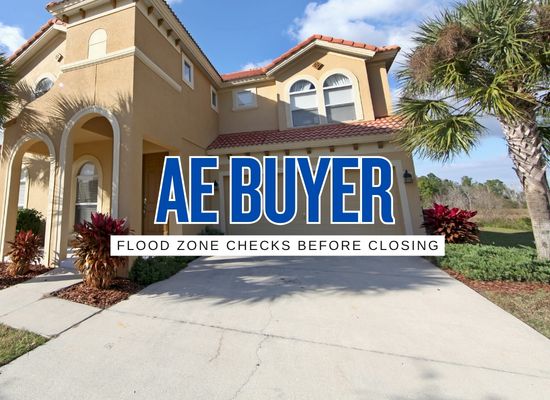
Flood Zone AE does not automatically mean a house is a bad buy. It does mean the buyer needs better numbers before falling in love with the kitchen, yard, dock, porch, or price. Zone AE is a FEMA high-risk flood area where Base Flood Elevations are shown, and homes with federally backed mortgages usually face mandatory flood insurance requirements. The real decision is not simply “in the zone or out of the zone.” It is whether the home’s floor elevation, flood history, insurance quote, drainage setting, utility placement, repair cost, resale outlook, and purchase price still make sense together.
A house in Flood Zone AE should be evaluated like a property with a built-in operating cost and a built-in risk file. The home may still be a smart purchase, but the buyer needs to verify the flood map, compare the floor elevation with the Base Flood Elevation, price flood insurance before closing, review past water history, inspect drainage, check utility placement, and decide whether the offer price reflects the real cost of ownership.
The AE decision is not a simple yes or no
Flood Zone AE means the property sits in a mapped high-risk flood area with a Base Flood Elevation. That tells the buyer the home is in a regulated floodplain, but it does not tell the whole story. Two AE homes on the same street can carry very different risk if one has a higher finished floor, better drainage, elevated utilities, fewer prior claims, stronger construction, or a lower insurance quote.
Some AE homes are responsibly elevated, well insured, priced appropriately, and located in communities that actively manage drainage. Others may look affordable at first glance but become expensive when flood premiums, deductibles, repairs, utility exposure, resale friction, and future map changes are included. The right decision comes from the numbers, not the zone label alone.
Do not make an AE-zone offer without a flood insurance quote, elevation information, flood history questions, drainage review, and a repair or mitigation budget.
9 practical checks before buying in Flood Zone AE
These checks help a buyer separate a manageable AE property from a risky purchase that only looks like a bargain.
①Verify the exact flood zone and map panel
Start with the official FEMA map, then confirm the address, structure location, map panel, flood zone, and Base Flood Elevation if shown. Do not rely only on a listing badge, third-party real estate map, or a seller’s memory.
②Compare finished-floor elevation with the Base Flood Elevation
The most important number is often not the flood zone itself. It is the relationship between the home’s lowest finished floor and the Base Flood Elevation. A home above that elevation may be very different from one below it.
③Get a flood insurance quote early
Do this before the inspection period gets tight. Under modern flood pricing, premiums can vary based on property-specific factors, not only the flood zone. Ask for both building and contents options, deductibles, and any waiting-period details.
④Ask for the elevation certificate or check if one is already on file
An elevation certificate can help clarify the building’s elevation and may identify possible insurance discounts. If the seller does not have one, the local floodplain manager, prior insurer, surveyor, or permit office may be able to help locate or explain the next step.
⑤Separate structure flooding from yard and street flooding
A seller may say the house never flooded, while the street, garage, driveway, crawlspace, shed, or yard has flooded several times. That still matters for access, insurance decisions, garage storage, emergency planning, and resale.
⑥Inspect drainage during real rain if possible
Dry-day showings hide water behavior. Watch gutters, downspouts, swales, ditches, culverts, street drains, driveway slope, patio elevation, and nearby low points. The home should not be the collection bowl for surrounding runoff.
⑦Check utilities and mechanical systems
HVAC equipment, water heaters, electrical panels, outlets, generators, pool equipment, well controls, and sewer cleanouts can be expensive weak points. A home may stay mostly dry while low equipment still takes serious damage.
⑧Review remodel limits and future improvement rules
Floodplain rules can affect additions, substantial improvements, repairs after damage, enclosed areas below elevated floors, garages, sheds, fill, fences, and utility work. Buyers planning renovations should check local rules before closing.
⑨Make the offer reflect the ongoing cost
The price should account for annual flood insurance, deductibles, possible mitigation, utility elevation, drainage repairs, resale concerns, and the buyer’s comfort level. A lower purchase price may not be enough if ownership cost is still too high.
AE buyer risk table
A Zone AE home can land in different risk bands depending on elevation, history, drainage, and insurance. The table below turns the inspection process into a practical buyer readout.
| Buyer signal | Better sign | Caution sign | Offer response |
|---|---|---|---|
| Elevation | Finished floor is above Base Flood Elevation with supporting records | Finished floor is below BFE or elevation is unknown | Request elevation data, price mitigation, or renegotiate |
| Insurance | Quote is affordable with clear building and contents options | Quote is high, unclear, or delayed until late in closing | Make insurance quote a serious affordability input |
| History | No known structure flooding and clear repair records | Prior water intrusion, repeated yard flooding, or vague disclosure | Ask for records, photos, claims information, and repair documentation |
| Drainage | Water moves away from house, drains are maintained, street does not pond badly | Low driveway, blocked ditch, nearby culvert issue, patio slopes toward home | Get contractor input and price drainage corrections |
| Utilities | HVAC, electrical, generator, water heater, and outlets are elevated or protected | Low utilities sit in likely flood path | Price equipment elevation or replacement exposure |
| Renovation plan | Local floodplain rules fit the buyer’s planned improvements | Major remodel may trigger expensive compliance requirements | Call the local floodplain office before closing |
| Resale | Price, insurance, and elevation records make the home explainable to future buyers | High premium, no elevation data, prior flooding, and poor drainage | Demand a stronger discount or keep looking |
Flood Zone AE buyer scorecard
Use this planning tool to estimate whether a Zone AE home deserves a deeper inspection, price negotiation, or a walk-away conversation. It is not an insurance quote, appraisal, engineering report, or legal opinion.
Score logic: elevation, insurance, history, drainage, utilities, and renovation risk are combined into a 100-point planning score. The ownership cost signal combines flood insurance over the expected ownership period, mitigation allowance, and deductible reserve. The negotiation range is a planning range, not an appraisal adjustment.
Insurance check before the inspection clock runs out
A Zone AE buyer should not treat flood insurance as a closing detail. It belongs near the beginning of the due-diligence process.
- ① Quote the exact address: Do not rely on a neighbor’s premium or an online estimate for a different property.
- ② Ask for building and contents options: Contents coverage may be separate and should be priced before closing.
- ③ Compare deductibles: A lower annual premium may come with a larger out-of-pocket event cost.
- ④ Ask about elevation data: An elevation certificate or other elevation information may help clarify discounts or compliance details.
- ⑤ Check private flood options carefully: Private policies may have different limits, exclusions, underwriting rules, and renewal behavior.
- ⑥ Confirm the lender requirement: If the buyer uses a federally backed mortgage in a high-risk area, flood insurance is usually not optional.
- ⑦ Save the quote in the deal file: The quote should be reviewed with taxes, HOA dues, mortgage, insurance, and maintenance costs.
Inspection areas that matter more in Zone AE
A standard inspection is helpful, but AE buyers should ask the inspector, surveyor, insurance agent, and local floodplain office to help answer flood-specific questions.
| Area | Buyer concern | Useful follow-up |
|---|---|---|
| Foundation and lowest floor | Finished floor may sit too close to expected flood elevation | Request elevation certificate, surveyor input, or floodplain office guidance |
| Garage and enclosed lower areas | Low enclosures may flood first or face rule limitations | Check vents, materials, storage use, and local compliance rules |
| Utilities | Low equipment can create large repair bills | Price elevation of HVAC, electrical, water heater, generator, or pool equipment |
| Drainage | Yard, street, ditch, or canal conditions can add risk beyond the map | Walk after rain, review local drainage records, ask neighbors carefully |
| Prior repairs | New drywall, trim, flooring, cabinets, or paint may hide past water damage | Ask for invoices, permits, claim records, and photos from the repair period |
| Future improvements | Floodplain rules can affect remodel cost and permits | Call the local floodplain administrator before planning additions or major repairs |
Offer strategy for an AE-zone home
The buyer’s offer should not simply discount the flood zone. It should reflect specific facts found during due diligence.
1Insurance adjustment
If the premium is meaningfully higher than expected, calculate the cost over the expected ownership period and decide how much of that should affect the offer.
2Mitigation allowance
If utilities need elevation, drainage needs correction, openings need protection, or storage needs redesign, request a price adjustment or credit where allowed by the lender and contract.
3Documentation condition
A home with a clean elevation certificate, no known structure flooding, strong maintenance records, and clear insurance pricing is easier to justify than a home with missing records and vague answers.
4Resale pressure
Future buyers may ask the same questions. If the home has poor elevation, high premiums, prior flooding, or repeated access issues, the current buyer should assume resale may require more explanation and possibly a sharper price.
Buyer red flags that deserve a pause
These warning signs do not always mean the buyer should walk away. They do mean the buyer should slow down before spending more money or waiving contingencies.
- ① No flood insurance quote yet: The buyer cannot know the real monthly cost without pricing coverage.
- ② No elevation information: AE decisions are much weaker without knowing the home’s elevation relationship to the BFE.
- ③ Vague flood disclosure: “Not that we know of” is not the same as clear history, especially near visible drainage.
- ④ Fresh repairs without paperwork: New floors, drywall, paint, cabinets, or trim should be explained with invoices and permits where applicable.
- ⑤ Low utilities: HVAC, water heater, electrical, and generator equipment near flood level can be expensive to protect or replace.
- ⑥ Street or driveway ponding: A dry house can still be a bad daily-life fit if access repeatedly floods.
- ⑦ Major remodel planned: Floodplain rules can change the cost and feasibility of improvements.
- ⑧ Seller refuses reasonable records: Missing elevation, repair, claim, or permit records can increase uncertainty.
The practical AE buyer takeaway
Buying in Flood Zone AE can make sense when the home is priced properly, the finished floor is high enough, insurance is affordable, drainage is manageable, utilities are protected, and the buyer understands local floodplain rules. It becomes risky when the buyer treats the zone label as the only piece of information. The best decision comes from a full file: official map, elevation data, insurance quote, inspection findings, flood history, drainage review, mitigation budget, and a purchase price that reflects the real cost of owning the home.