
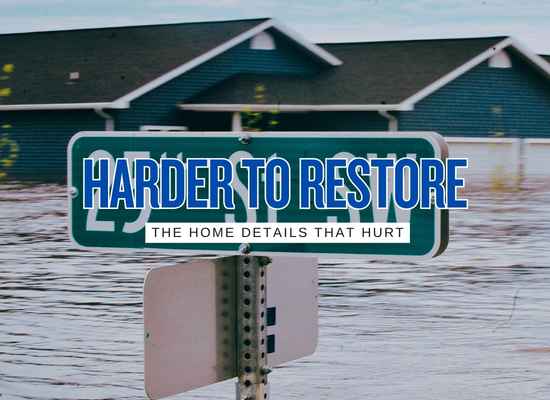
Flood cleanup cost is not driven only by how high the water gets. It is also driven by what the house is made of, how the lower parts are finished, where the utilities sit, and whether the building traps moisture in ways that force more demolition than owners expected. FEMA’s current technical guidance still points to the same core truth: flood-damage-resistant materials can reduce damage and facilitate cleanup, utility protection matters because system losses can be severe and disruptive, and lower areas built with vulnerable finishes often require much more tear-out after floodwater enters.
Some houses do not just get wet more easily. They also recover much worse.
A flood does not hit every house the same way. Two homes can take on similar water and end up with very different repair bills because one was built with easier-to-clean materials, better utility placement, and simpler lower-level finishes, while the other traps moisture, ruins expensive surfaces, and forces contractors to open walls, remove flooring, and replace systems far beyond what the owner expected.
That is why this article focuses on the house itself. Not the storm. Not the river. Not the forecast. The building. Because once water gets in, the wrong house features can turn a hard cleanup into a much bigger financial event.
The fast read on expensive cleanup features
| Feature | Why it makes cleanup harder | Typical result |
|---|---|---|
| Water-sensitive flooring | Swells, separates, or traps moisture fast | Large tear-out and longer dry-out |
| Standard drywall and lower-wall finishes | Absorbs dirty water and often has to be removed | Bigger demolition zone than expected |
| Low-mounted utilities | Expensive systems fail early in a flood | Higher replacement cost and slower re-occupancy |
| Heavy lower-level finishes | More materials get damaged at once | Expensive rebuild after moderate flooding |
| Hidden moisture cavities | Water stays trapped after visible cleanup | Longer remediation and delayed rebuild |
10 house features that make flood cleanup harder and more expensive
This is structured as a house-by-house risk map rather than a normal listicle. Each feature below makes cleanup worse for a different reason.
1️⃣ Flooring that reacts badly the moment it gets wet
One of the fastest ways to turn a moderate flood into a costly cleanup is to have water-sensitive flooring at the lowest likely flood level. Floors that swell, delaminate, trap contaminated water, or cannot be dried effectively force a much larger tear-out footprint than owners expect. Once the floor fails, trim often follows, and the drying process underneath becomes more disruptive too.
This is why flood-damage-resistant material guidance matters so much. The wrong floor does not just get damaged. It also makes everything around it harder to save.
FEMA Technical Bulletin 2 on flood-damage-resistant materials
2️⃣ Lower walls built with materials that soak up floodwater fast
Flood cleanup gets more expensive when the lower wall system is almost guaranteed to absorb and hold dirty water. Standard drywall, insulation, lower trim, and decorative wall finishes often expand the damage zone because they are not just wet surfaces. They become contaminated assemblies that frequently need removal before the house can be dried and rebuilt correctly.
Recent FEMA cleanup fact sheets remain very direct about this. If drywall and insulation have been in contact with floodwaters, removal is often part of the recovery process. That is exactly why lower-wall material choice matters so much before a flood ever happens.
3️⃣ Finished lower levels packed with normal interior materials
A finished basement or enclosed lower level often looks like added value until floodwater arrives. Then it becomes a concentration zone for loss. Flooring, drywall, cabinetry, doors, shelving, electronics, furniture, and decorative finishes can all be hit at once. The cleanup stops being about one wet area and becomes a full demolition and rebuild story.
This is one of the biggest reasons flood-history homes with attractive lower-level finishes deserve closer scrutiny. Beauty below likely flood height can become very expensive beauty very quickly.
4️⃣ Utility systems placed low where floodwater can reach them early
Low-mounted HVAC components, water heaters, electrical panels, sockets, wiring, appliances, and similar systems are some of the most painful losses after a flood. When these systems get hit, the damage is not just material. It also slows re-occupancy and raises the disruption level of the entire recovery.
FloodSmart and FEMA continue to emphasize utility elevation for a reason. Elevated utilities are less likely to be damaged by floodwater, and protecting them can reduce both direct losses and the time it takes to make a home functional again.
5️⃣ Cabinets, built-ins, and storage features anchored low
Permanent lower-level storage seems efficient until it becomes a water trap. Cabinets, built-ins, bench storage, closet systems, and low shelving can hold moisture, silt, and contamination in places that are slow to clean and slow to dry. They also hide damage behind and underneath the finished surface.
That hidden-damage effect is one reason cleanup cost jumps. The owner thinks the visible mess is the problem. The contractor knows the concealed moisture often drives the real scope.
6️⃣ Wall cavities and insulation systems that keep water hidden
Flood cleanup gets much more expensive when materials stay wet after the obvious standing water is gone. Wall cavities, insulation, concealed chases, and other enclosed spaces often delay dry-out and expand the remediation window. A room can look close to recovery while the assembly behind it is still wet enough to force more removal.
This is another reason FEMA cleanup advice is aggressive about removing affected drywall and insulation after true floodwater exposure. Hidden moisture is one of the easiest ways to underestimate the real cost of the event.
7️⃣ Enclosed crawlspaces or lower enclosures that handle water badly
Some lower enclosed spaces become especially expensive cleanup areas because they are hard to access, slow to dry, and vulnerable to trapped water or damaging hydrostatic pressure. FEMA’s wet floodproofing guidance and technical bulletins exist precisely because lower enclosures and enclosed areas must be handled carefully where flooding is possible.
When these spaces are poorly configured for flood behavior, the result is not just more mess. It is more labor, more structural concern, and a bigger chance that damage remains hidden longer than it should.
8️⃣ Layouts that make debris removal and drying difficult
Some flood cost is material cost. Some is labor friction. Tight stairs, awkward lower-level access, cramped mechanical spaces, and layouts that make debris removal slow all push the bill upward even when the water depth is not extreme. Drying equipment placement also gets harder in these layouts, which extends cleanup time.
This feature is often overlooked because it is not a material. It is a labor multiplier. But on real jobs, labor multipliers matter a lot.
9️⃣ Decorative lower-level finishes that look premium but recover poorly
Ornate trim packages, layered millwork, decorative built-ins, specialty lower-wall treatments, and delicate materials all raise cleanup cost because they create more surfaces to fail and more places where dirty water can leave lasting damage. The issue is not style. The issue is putting hard-to-recover style at the exact height most likely to flood first.
In flood-prone spaces, the prettiest option is often not the most resilient option, and cleanup pricing eventually reflects that.
🔟 Homes rebuilt after earlier floods without learning from the first one
This may be the most frustrating feature on the list because it reflects a decision, not just a building condition. When a house floods, gets repaired, and then receives the same vulnerable finishes, the same low utility placement, and the same lower-level material choices again, the next flood often repeats the same damage pattern. FEMA’s rebuilding guidance and utility-protection guidance both point toward building back in ways that reduce future damage and facilitate recovery.
Rebuilding with the same weak choices usually means paying for the same lesson twice.
A different way to inspect a flood-prone house
Look low first
Floors, lower walls, trim, utility platforms, cabinets, and storage at the lowest likely water line tell the story quickly.
Look behind the finish
Ask what is inside walls and enclosed spaces, not just what looks attractive on the surface.
Look at system placement
If expensive equipment is low, the cleanup bill usually rises much faster.
Look for repeat choices
If the home has flooded before, ask whether the rebuild actually changed anything meaningful.
Look for recovery difficulty, not just flood probability
Some homes are not just flood exposed. They are flood expensive.
Flood cleanup burden check
This tool is not an estimate. It is a quick way to see whether a house looks relatively recovery-friendly or whether its design choices are likely to make cleanup much harder.
The most useful questions to ask when buying or rebuilding
| Question | Why it matters | Red flag |
|---|---|---|
| What materials sit closest to the likely water line? | Shows whether even shallow flooding becomes expensive fast | Highly vulnerable finishes at the lowest level |
| Where are the major utilities and appliances? | System location drives both cost and downtime | Low-mounted equipment with easy flood reach |
| Will floodwater get trapped behind finishes or in enclosed spaces? | Hidden moisture often drives the real scope | Lots of enclosed lower-wall or crawlspace complexity |
| Was the house rebuilt after prior flooding with better materials and better placement? | Shows whether the next flood is likely to repeat the same losses | Same vulnerable design choices after prior damage |
| Is this house hard to dry and hard to gut? | Labor friction raises cleanup bills quickly | Awkward access, tight lower areas, complicated finish layouts |