
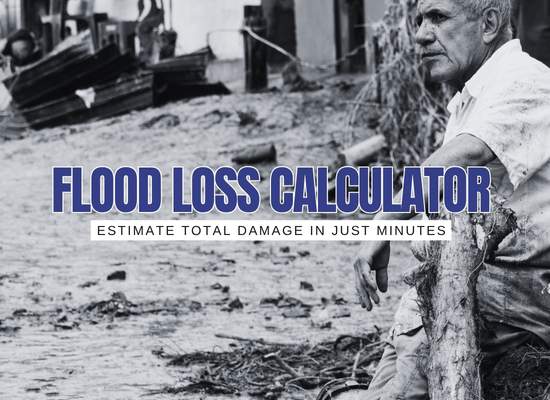
I’ve been through this myself. After the water finally drained from our building, what hit us next wasn’t the smell or the cleanup, it was the mountain of paperwork: contractor quotes, insurance forms, loan applications, and board reports.
That’s why we built this tool. Our Total Flood Loss Estimator turns all that chaos into one clear number by combining building repairs, equipment replacement, inventory damage, and cleanup costs. Plug in a few details and walk away with a defensible figure you can hand to insurers or accountants.
⚡ Fast, Credible, Actionable
- Powered by depth-damage curves from FEMA and RSMeans® cost indexes.
- Breaks results into Building, Equipment, and Inventory buckets for easy claims filing.
- One-click export to PDF so evidence reaches adjusters before mold does.
| Category | User Provides… | Estimator Returns… |
|---|---|---|
| Structure | Square footage, construction type, water depth | Repair / rebuild cost |
| Equipment | Replacement value of machinery & electronics | Depreciated and full-value options |
| Inventory | Cost of goods on hand | Wholesale and retail loss totals |
| Cleanup | Debris category & disposal fees | Removal and haul-off estimate |
| Hidden Extras | Contingency (%), code-upgrade factor | Buffer for surprises |
💡 Quick Tips for Accurate Results
1. Measure average water depth – not the deepest point – to avoid inflated figures.
2. Use replacement cost for mission-critical equipment; insurers often default to depreciated value.
3. Add a contingency of 10 %–15 % if local labor rates surge after regional disasters.
Scroll down to launch the calculator, tweak the sliders, and watch real-time totals update. Once you have your number, you’ll see buttons to save, print, or jump straight into our SBA Disaster Loan Affordability Tool.
Estimate Your Total Flood Loss
Figures are estimates only and use inputs you provide. Always obtain professional quotes for insurance or financing decisions.