
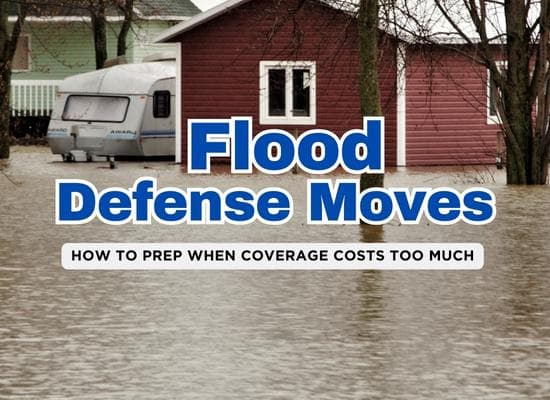
When flood insurance costs more than your budget can handle, it’s easy to feel like you have no options. 🌧️💸
But the truth is, while nothing replaces a full insurance policy, there are smart, practical moves you can make to protect your home, your finances, and your peace of mind. If you live in a flood-prone area and can’t swing traditional flood insurance, these alternative strategies can still offer serious help — and in some cases, major savings.
⚠️ Quick Disclaimer
While these alternatives can reduce your financial risk, they cannot fully replace a comprehensive flood insurance policy. If a major flood occurs, you may still face large out-of-pocket costs. Always weigh your personal risk carefully and seek professional advice when possible.
1️⃣ Elevate Appliances, Utilities, and Critical Systems
One of the smartest (and cheapest) ways to limit flood damage is to get expensive equipment out of harm’s way.
By raising water heaters, air conditioning compressors, electrical panels, furnaces, washers, dryers, and generators above projected flood levels, you could save tens of thousands of dollars in replacement costs.
- Typical Costs:
DIY projects like platform builds can cost under $200 if you’re handy. Professional elevation services for heavy units may cost $500–$1,500 — still far cheaper than replacing entire systems after a flood. - Real-World Tip:
Focus first on your basement and ground floor. Even raising appliances 12 to 24 inches can mean the difference between minor inconvenience and catastrophic loss. - Bonus Protection:
Secure the elevated appliances to the wall or a sturdy structure so they don’t float away or tip over during flash floods.
2️⃣ Install Certified Flood Vents in Your Foundation
If you own a home with a crawlspace or basement, flood vents can be a powerful (and often overlooked) defense.
Flood vents allow rising water to pass through the foundation instead of building up pressure that can crack, buckle, or even collapse walls.
- Typical Costs:
Expect about $200–$300 for basic certified vents, plus installation if you don’t DIY.
(Some regions even offer rebates for installing FEMA-compliant models.) - Real-World Tip:
One vent per 200 square feet of enclosed space is the standard. Don’t skimp — proper sizing matters or it won’t work when you need it most. - Bonus Protection:
Vents don’t just protect the structure — they can lower flood insurance premiums if you later decide to buy a policy.
3️⃣ Build Low-Cost Barriers to Divert Water
Physical barriers might seem old-school, but they remain one of the most reliable and affordable first lines of defense.
Even temporary solutions like sandbags can redirect floodwaters away from doors, garages, and basement windows, giving you precious time to avoid severe water entry.
- Typical Costs:
Sandbags cost about $0.50 to $1.00 each — a full protective setup for a small home might only run $50–$150 total.
DIY berms and low retaining walls vary based on materials but often stay under $500 if done manually. - Real-World Tip:
Focus on sealing the “weak points” of your home first: exterior doors, garage entrances, and low basement windows. - Bonus Protection:
Consider investing in reusable flood barriers or water-filled tubes that are easier to deploy than traditional sandbags and can be used year after year.
4️⃣ Seal Foundation Cracks and Gaps
Many homes, especially older ones, have tiny cracks or gaps in the foundation that seem harmless — until floodwaters arrive.
Even a small crack can allow gallons of water to seep into a basement or crawlspace, leading to expensive mold problems, structural issues, and ruined possessions.
- Typical Costs:
Basic waterproofing crack repair kits start around $50. Professional sealing services range from $300–$800 depending on the size and extent of the work. - Real-World Tip:
Inspect your foundation carefully — inside and outside — looking for hairline cracks, loose mortar, and pipe entry points. These small vulnerabilities are usually the first to fail in a flood event. - Bonus Protection:
Adding an exterior waterproof sealant to your foundation can further harden your home against both floodwater and groundwater seepage.
5️⃣ Create an Emergency Water Evacuation Plan
If you can’t stop all water from entering your home, the next best thing is getting it out fast.
Having tools and a plan to pump out water quickly can limit how long the water sits, reducing structural damage and mold growth.
- Typical Costs:
A small utility pump costs around $100–$150. Battery-powered sump pumps run slightly more but work during power outages. - Real-World Tip:
Keep a heavy-duty extension cord and a backup battery handy. Water often comes with power failures, and you’ll want to act immediately. - Bonus Protection:
Practice using the pump ahead of time — floods don’t wait for a learning curve.
6️⃣ Stockpile Emergency Flood Supplies
When you can’t afford a flood insurance safety net, preparation becomes your frontline defense.
Having the right materials ready and waiting can help you act fast to minimize flood damage when every minute counts.
- Typical Costs:
Building a solid flood emergency kit can be done for $100–$200 if you shop smart. - Smart Kit Items to Include:
- Heavy-duty plastic sheeting and duct tape (to quickly seal openings)
- Waterproof containers for valuables
- Sandbags or flood tubes
- Wet/dry shop vacuum
- Flashlights and portable battery banks
- Real-World Tip:
Store your flood kit in an easily accessible, high-up location. The last thing you want during a flood warning is to dig through a flooded garage for supplies.
7️⃣ Use Water-Resistant Building Materials
If you’re doing any home repairs or remodeling, it’s smart to build flood resistance into the bones of your house.
Choosing materials that can survive water exposure — rather than absorb it — can make a huge difference after a flood.
- Typical Costs:
Upgrading to water-resistant drywall (“blue board” or “green board”) costs about 20–30% more than standard drywall, but it saves thousands in future repairs. - Best Upgrades to Consider:
- Tile or concrete flooring instead of carpet
- Closed-cell foam insulation instead of fiberglass
- Metal or PVC baseboards instead of wood
- Real-World Tip:
Focus upgrades on the most flood-prone parts of your home first — basements, ground-floor living areas, and entryways.
8️⃣ Redirect Water with Landscaping
Good landscaping isn’t just for curb appeal — it can change the way water moves around your home during heavy rains.
Simple grading or drainage improvements can dramatically lower flood risk without major construction.
- Typical Costs:
Basic regrading services cost $500–$1,500, but DIY grading with a shovel and some time can cost next to nothing. - Easy Landscaping Ideas:
- Create swales (small ditches) to channel water away
- Add rain gardens to absorb excess runoff
- Extend downspouts at least 6–10 feet from your home
- Real-World Tip:
Pay attention to how water flows across your property during the next heavy rain — it’s the best blueprint for improvements.
9️⃣ Create a Household Flood Response Plan
Having supplies is important — but knowing exactly what to do when the water starts rising is even more critical.
A clear flood response plan can save lives, limit panic, and speed up action to protect your property.
- Typical Costs:
Free — just a bit of time and planning. - What Your Plan Should Include:
- How and when to evacuate
- Who’s responsible for protecting what inside the house
- Where important documents, valuables, and flood kits are stored
- Real-World Tip:
Practice a “flood drill” with your family once a year, just like a fire drill.
🔟 Build an Emergency Savings Buffer
Even a small savings account specifically for flood emergencies can be a lifesaver if disaster strikes.
While it won’t cover a full rebuild, having even $500 to $1,000 set aside can help you tackle immediate repairs or temporary relocation costs without going into debt.
- Typical Costs:
Whatever you can afford — $10–$20 per paycheck adds up fast. - Real-World Tip:
Keep this fund separate from your regular checking account so it’s not accidentally spent on daily expenses.
Real Protection Comes from Real Preparation
Flood insurance is important — but for many families, it’s simply out of reach.
That doesn’t mean you’re powerless.
By using a smart mix of preparation, upgrades, planning, and savings, you can drastically lower your risk and bounce back faster if the worst happens. 🏠⚡
You might not be able to stop the floodwaters, but with the right moves, you can stop them from ruining everything you’ve built.
And that peace of mind?
👉 It’s worth every bit of effort.