
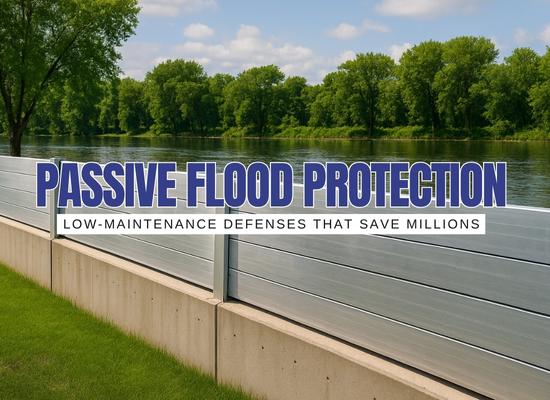
As climate change intensifies rainfall and sea levels continue to rise, cities and towns are turning to smarter, more reliable ways to defend themselves. Passive flood protection solutions are gaining traction as long-term strategies that work automatically without the need for human activation or constant maintenance. These systems are built into the landscape, infrastructure, or building design itself, quietly reducing flood risk year after year. Below are the top passive flood protection solutions that are helping communities stay safe while minimizing operational burden.
Community Flood Cost Calculator
Estimated Total Flood Cost
$0
1️⃣ Elevated Roads and Critical Corridors
Core IdeaLift essential roadways, bridges, and evacuation routes above projected flood levels so that people, supplies, and emergency crews can move safely even during major storms.
How It Works- Roadbeds are rebuilt on compacted fill, pilings, or causeways.
- Approach ramps are graded gradually to maintain accessibility.
- Drainage culverts or small spans allow natural water flow beneath the raised surface.
- Maintains evacuation routes and supply chains when floods hit.
- Reduces future repair costs and downtime for critical infrastructure.
- Boosts property values along the protected corridor.
Coastal highways, riverfront arterials, and low-lying urban connectors that repeatedly wash out or become impassable.
2️⃣ Floodable Parks and Open Spaces
Core IdeaDesign recreational areas such as parks, athletic fields, and riverfront promenades to act as temporary storage basins that soak up overflow and keep surrounding neighborhoods dry.
How It Works- Land is graded into bowl-shaped depressions or tiered terraces.
- Native vegetation and resilient turf withstand periodic submersion.
- Hidden drain valves or infiltration layers release water slowly after storms.
- Absorbs peak flows, protecting homes and businesses downstream.
- Provides green space and recreation the rest of the year.
- Improves stormwater quality through natural filtration.
Urban waterfronts, river confluences, and downtown districts where land reuse for dual flood-and-recreation purposes adds the greatest value.
3️⃣ Room to Breathe: Retention and Detention Basins
Core IdeaCreate engineered ponds or sunken greenspaces that capture stormwater, hold it temporarily, and release it gradually so downstream channels never overflow.
How It Works- Retention basins keep water until it infiltrates or evaporates.
- Detention basins release water slowly through controlled outlets.
- Side slopes are landscaped for recreation and ecological habitat.
- Reduces peak flood heights and erosion downstream.
- Supports wildlife and adds park amenities like trails or seating.
- Improves water quality by allowing sediments to settle.
Suburban neighborhoods, commercial districts, and industrial parks with large impervious areas that need extra stormwater storage.
4️⃣ Green Gutters Underfoot: Bioswales and Rain Gardens
Core IdeaShape shallow, vegetated channels and planting beds that slow down runoff, filter pollutants, and let water soak into the ground rather than racing toward storm drains.
How It Works- Native grasses, shrubs, and flowers increase infiltration rates.
- Engineered soils promote drainage while capturing nutrients.
- Gentle slopes guide water through a meandering path for maximum contact time.
- Lowers flood risk block by block without major construction.
- Cuts down on pollutants like oil, metals, and fertilizers.
- Adds street-level greenery that cools and beautifies urban areas.
Along residential streets, parking lots, and campuses where surface runoff is high but land area for larger basins is limited.
5️⃣ Streets That Soak It Up: Permeable Pavements
Core IdeaReplace traditional asphalt or concrete with porous surfaces that let rainwater pass through, reducing runoff at the source and easing pressure on storm drains.
How It Works- Pores or gaps between pavers allow water to infiltrate into a gravel sub-base.
- Stored water slowly seeps into native soil or drains through underground pipes.
- Optional geotextile layers filter fine sediments and prevent clogging.
- Cuts peak flow volumes, lowering flood risk on downstream streets.
- Improves water quality by trapping hydrocarbons and heavy metals.
- Extends pavement life by reducing freeze–thaw stress.
Parking lots, low-traffic residential roads, alleys, and civic plazas where heavy truck loads are minimal and aesthetics matter.
6️⃣ Quiet Walls of Earth: Berms and Levees
Core IdeaShape compacted soil embankments around neighborhoods, industrial plants, or water facilities to create a constant barrier that redirects floodwaters away from vital assets.
How It Works- Engineers calculate required height based on projected flood levels.
- Layers of clay or geosynthetic liners reduce seepage through the berm.
- Grassy cover protects the surface from erosion and blends with the landscape.
- Provides 24-hour protection without power or mechanical parts.
- Can shield large campuses or entire neighborhoods with a single project.
- Offers recreational trails or greenways on the crest when designed for multi-use.
Riverfront towns, wastewater treatment plants, and logistics hubs where space allows for a broad footprint and the stakes of inundation are high.
7️⃣ Hidden Highways Below: Subsurface Drainage Tunnels
Core IdeaInstall deep underground tunnels and culverts that quietly move floodwater away from dense urban areas, buying time for surface systems to catch up.
How It Works- Stormwater enters through inlets and drop shafts during heavy rain.
- Gravity and slope guide the water to discharge points outside the city.
- Massive tunnel diameters prevent backflow during peak surges.
- Reduces urban street flooding without altering surface infrastructure.
- Improves resilience in highly developed zones with limited land space.
- Operates passively with no need for pumps or manual activation.
Downtowns, transportation hubs, and large coastal cities where surface development makes above-ground water storage impossible.
8️⃣ Coastal Shields in Motion: Sand Dune Reinforcement
Core IdeaStrengthen natural sand dunes along coastlines to serve as passive barriers that absorb wave energy and slow inland surge without concrete or seawalls.
How It Works- Sand is added or reshaped to form higher and wider dune ridges.
- Native grasses and shrubs stabilize the surface and trap new sand.
- Walkovers or boardwalks protect dunes from foot traffic damage.
- Protects homes, roads, and wetlands from coastal flooding and erosion.
- Improves beach aesthetics and supports tourism.
- Self-renewing if allowed to function with wind and vegetation naturally.
Barrier islands, oceanfront towns, and coastal parks vulnerable to storm surges and sea-level rise.
9️⃣ Nature’s Sponge: Wetland and Marsh Restoration
Core IdeaReclaim or restore wetlands and marshes to act as natural flood buffers. These ecosystems soak up vast volumes of water and slow down storm-driven surges before they reach developed areas.
How It Works- Reintroduce native wetland plants and remove artificial drainage systems.
- Restore natural flow patterns and sediment buildup zones.
- Expand or reconnect wetlands to nearby rivers, estuaries, or coastal plains.
- Reduces flood intensity by absorbing and slowing water flow.
- Improves water quality through natural filtration of nutrients and pollutants.
- Provides habitat for wildlife and educational green space for the public.
River deltas, coastal estuaries, and low-lying inland zones previously drained for agriculture or development.
🔟 Water That Waits: Self-Rising Passive Flood Barriers
Core IdeaInstall barriers that lie hidden or flush with the ground during dry conditions, but automatically lift into place using hydrostatic pressure when floodwaters arrive.
How It Works- Barriers are stored in underground chambers or surface slots.
- Rising water fills a float chamber that triggers vertical lift.
- Once deployed, the barrier seals off doorways, roadways, or infrastructure entrances.
- Protects key infrastructure without relying on electricity or manual deployment.
- Blends seamlessly into the urban environment when not in use.
- Ideal for sites where space for levees or berms is limited.
Urban waterfronts, transit entrances, historic districts, and building thresholds in cities with unpredictable flash flooding.
1️⃣1️⃣ Rooftops That Retain: Green Roofs and Water-Holding Systems
Core IdeaTurn rooftops into functional flood protection tools by covering them with vegetation or water retention trays that delay stormwater runoff at the source.
How It Works- Vegetated green roofs absorb rainfall and reduce runoff velocity.
- Blue roofs hold stormwater temporarily in trays or tanks before releasing it slowly.
- Layered drainage materials prevent root damage and manage overflow efficiently.
- Reduces pressure on sewer systems during peak rainfall events.
- Lowers building energy costs by insulating roof surfaces.
- Improves air quality and adds biodiversity to urban areas.
Dense cities with limited ground-level green space and high volumes of impervious roofing across government, school, and commercial buildings.
1️⃣2️⃣ Planning That Protects: Floodplain Zoning and Setback Buffers
Core IdeaUse land-use regulations to keep flood-prone areas clear of high-risk development, while preserving natural flood absorption zones like riparian corridors and riverbanks.
How It Works- Zoning codes restrict building in designated floodplains or enforce elevation standards.
- Setback rules create distance between waterways and permanent structures.
- Flood-prone lands are used for parks, trails, or agriculture instead of homes and businesses.
- Prevents repetitive flood damage and costly emergency response.
- Maintains natural water flow and floodplain function.
- Encourages long-term smart growth and resilience.
Growing communities near rivers, lakes, or coasts that are expanding into undeveloped or low-lying land.