
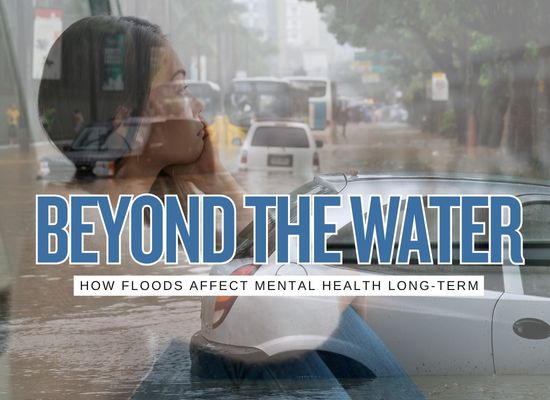
Floods don’t just wash away belongings—they erode peace of mind. Long after the waters recede and the insurance adjusters leave, what’s left behind often goes unnoticed: anxiety, sleep problems, decision fatigue, even depression. For many, the emotional impact of flooding is deeper and more lasting than the physical damage.
Whether it’s your first flood or your fourth, here are three ways flooding can affect mental health—plus real strategies to cope, rebuild, and protect your emotional well-being.
1️⃣ The Anxiety Never Really Leaves
The skies grow dark. Rain starts to pound. And suddenly, you’re checking river levels on your phone like your life depends on it—because it might.
What it feels like:
- Hypervigilance every time there’s a storm.
- Fear of leaving home during bad weather.
- Constant “what if” planning that interrupts sleep and daily routines.
How to cope:
- Create a concrete emergency plan. Knowing you’re prepared can reduce fear of the unknown.
- Use weather alerts, but limit obsessive checking. Set notifications and trust them.
- Talk to others who’ve been through it—community helps validate and defuse lingering fear.
2️⃣ The Guilt of Survival
You made it through. Maybe your house stayed dry. Maybe others weren’t so lucky. Survivor’s guilt is real, especially in close-knit neighborhoods.
What it feels like:
- Embarrassment when talking about your “less-bad” experience.
- Questioning why you were spared when others weren’t.
- Feeling pressure to stay silent or minimize your experience.
How to cope:
- Acknowledge your experience without comparison. Trauma doesn’t need to be extreme to be valid.
- Channel guilt into helpful action—volunteering, donations, or simply being a support for others.
- Consider counseling if guilt is interfering with your daily life. It’s common and treatable.
3️⃣ The Decision Fatigue of Rebuilding
After the flood comes a million small (and overwhelming) choices—what to toss, what to salvage, what to replace, which contractor to trust. It adds up fast.
What it feels like:
- Emotional numbness or avoidance of even basic decisions.
- Arguing with family over small things like paint color or flooring.
- Feeling paralyzed by too many options and not enough energy.
How to cope:
- Break tasks into categories: urgent, important, and can-wait.
- Take frequent mental breaks. You’re not lazy—you’re overloaded.
- Ask for help with decisions from friends or professionals who aren’t emotionally tied to the mess.
4️⃣ The Strain on Relationships
Flood recovery doesn’t happen in a vacuum—it happens in families, partnerships, and communities already under stress. Add loss, financial pressure, and disruption, and even the strongest relationships can crack.
What it feels like:
- Short tempers over small things.
- Blame, frustration, or withdrawal between partners or family members.
- Feeling isolated even when surrounded by people.
How to cope:
- Acknowledge the stress out loud. Just saying, “This is hard for all of us,” can reset the tone.
- Schedule time not focused on the flood. Even 30 minutes of normalcy helps.
- Seek outside help early—pastors, counselors, or local mental health services often have flood-specific support experience.
5️⃣ The Constant Financial Fear
Insurance claims. Deductibles. Temporary housing. Missed work. Flooding isn’t just a storm event—it’s a financial landslide that often hits those who are already stretched thin.
What it feels like:
- Panic at unexpected costs—even small ones.
- Reluctance to spend, even when necessary.
- Worry that it’ll all happen again, and next time, you’ll be broke.
How to cope:
- Create a basic financial roadmap: income, aid, insurance, and timeline.
- Look into local grants or nonprofit aid—many exist but aren’t well advertised.
- Know that financial stress is a mental health issue too. Don’t try to “tough it out” alone.
6️⃣ The Long-Term Trauma Triggers
The emotional fallout doesn’t follow a neat timeline. It might hit weeks later—sometimes months or even years—when something seemingly small sets it off.
What it feels like:
- Avoiding certain parts of your home or neighborhood.
- Sudden crying or flashbacks during a storm or newscast.
- A creeping sense of dread with no obvious cause.
How to cope:
- Track your triggers gently and without judgment.
- Normalize talking about it. Trauma after natural disasters is common—and healing is absolutely possible.
- Seek out trauma-informed counseling if symptoms persist or intensify.
7️⃣ The Disruption of Routine and Identity
Floods don’t just ruin homes—they throw life off balance. Suddenly, your daily routine is gone. Work is interrupted. Kids are out of school. Even your role in the family may shift.
What it feels like:
- Feeling lost or unproductive without your usual rhythm.
- Struggling to “feel like yourself.”
- Grieving the loss of normalcy, even in small things.
How to cope:
- Rebuild your routine piece by piece, even if it’s just morning coffee in the same mug.
- Let go of perfection—focus on stability over productivity.
- Be kind to yourself: recovery includes emotional balance, not just physical rebuilding.
8️⃣ The Fear of the Next One
Once you’ve experienced a flood, every future storm feels different. You’re no longer thinking if it floods again, but when.
What it feels like:
- Watching forecasts obsessively during rainy seasons.
- Wanting to move—but feeling stuck or financially unable to.
- Dreading future decisions like renovations or insurance renewals.
How to cope:
- Take back control with small preparedness wins: waterproof storage, raised outlets, sump pump backup, etc.
- Speak with your insurance agent to understand your real risk—and your options.
- Join local groups or forums where others understand the specific fear of repeat flooding.
9️⃣ The Feeling That No One Gets It
Once the media leaves and the help trucks drive away, life moves on—for everyone but you. And that can feel deeply lonely.
What it feels like:
- Frustration when others minimize what you’ve been through.
- Isolation from friends or coworkers who can’t relate.
- Feeling invisible during recovery, especially months later.
How to cope:
- Connect with others who’ve experienced flooding—online or locally.
- Write about your experience. Even a private journal can help make sense of it all.
- Remember: your trauma is valid, even if others don’t understand it.
Flooding may come in waves, but so does healing. The emotional toll is often invisible, yet just as real—and just as worthy of care—as any cracked foundation or ruined floorboard. If you’re navigating the mental aftermath of a flood, know this: you’re not overreacting, you’re not alone, and you’re allowed to take your time.
Water may change everything—but it doesn’t have to define you.