
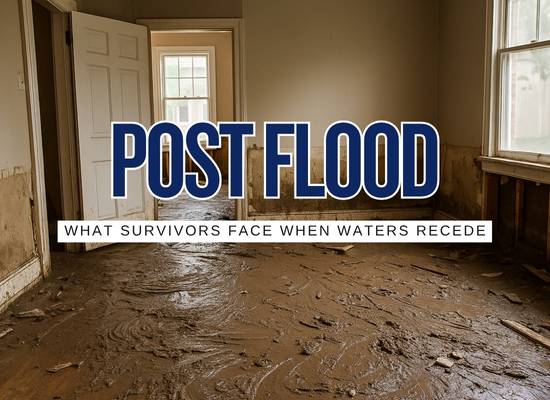
When floodwaters recede, the media disappears. The hashtags fade. The aerial photos stop circulating. But for the people left behind, the hardest part is just beginning. It’s not just about replacing drywall or tossing ruined furniture, it’s the smell, the silence, and the stress that seep in after the water goes.
This is the part most people never see.
Here’s what really happens when the flood is over.
🟫 MUD: The Mess That Stays Long After the Headlines
People talk about the water, but few talk about the sludge it leaves behind — heavy, dark, and laced with everything you never wanted in your home. This isn’t just wet dirt. It’s flood mud. And it changes everything.
It seeps into your floors, sticks to your walls, and ruins the things you didn’t even realize mattered until they were soaked in it. Cleaning it isn’t just physical. It’s emotional. It’s exhausting. It’s one of the most gut-wrenching parts of flood recovery — and almost no one is ready for it.
1️⃣ It’s Not Just Mud — It’s Toxic
Flood mud isn’t just soil. It’s a mix of sewage, gasoline, household chemicals, and bacteria. It smells bad for a reason. Even the color can change depending on what flowed through your neighborhood.
- Contains waste from overwhelmed septic systems
- Often mixed with gasoline and oil from flooded vehicles
- Can carry bacteria that causes skin infections or respiratory illness
- Requires gloves, boots, and sometimes respirators for safe removal
2️⃣ It Gets into Places You’ll Never Expect
Mud doesn’t just settle on the floor. It creeps into everything. You think you’ve cleaned a room, only to open a drawer and find it caked in the corners.
- Packs inside cabinets, vents, and wall cavities
- Hides under tile, inside couches, and behind appliances
- Soaks insulation where it can’t be cleaned — only torn out
- Often reappears even after a “deep” clean
3️⃣ The Smell Stays Long After the Mud Is Gone
Even when the mud is gone, the scent lingers. It becomes a haunting reminder that seeps into the house and, eventually, into memory.
- Leaves a sour, moldy odor in furniture and walls
- Smell intensifies on hot or humid days
- Many describe it as a trigger for stress or sadness
- Air fresheners and cleaning sprays usually can’t cover it
4️⃣ It Breaks You Down in Ways You Didn’t Expect
Most people underestimate how hard it is to clean mud out of a flooded home. After hours of scrubbing, sorting, and tossing cherished items, it becomes more than physical labor. It becomes grief.
- Cleanup often lasts for weeks, not days
- Forces people to throw away family heirlooms and keepsakes
- Physically exhausting, especially with limited help or supplies
- Emotionally draining when your home no longer feels like home
🦠 MOLD: The Silent Takeover
If the mud is obvious, mold is the opposite. It creeps in quietly and spreads invisibly. One day your walls look fine. The next, they smell off. Then the headaches start. Mold doesn’t just damage your home. It affects your health, your sleep, and even your relationships. And it moves fast — faster than most people realize.
1️⃣ Mold Moves in Before You’ve Even Had a Chance
Within 24 to 48 hours of flooding, mold begins to grow. You might not even be done pumping water out before it’s already taking hold in the walls.
- Starts growing on damp surfaces in one to two days
- Loves warm, humid spaces like drywall, wood, and insulation
- Often invisible at first but spreads behind walls and under floors
- Can become unmanageable before cleanup even begins
2️⃣ Bleach Doesn’t Always Fix It
Many people assume they can spray bleach and walk away. But bleach only works on hard, non-porous surfaces. It does nothing for the mold buried inside drywall or soaked into subflooring.
- Porous materials like drywall, carpet, and ceiling tiles must be removed
- Surface cleaning may mask deeper contamination
- Bleach can actually increase spore release if used improperly
- Professionals often need to test air quality and moisture levels
3️⃣ It Affects More Than Just the Structure
Mold doesn’t just rot your walls. It impacts your body. It can cause respiratory symptoms, fatigue, allergic reactions, and even mental fog. For children, the elderly, and those with asthma, it’s even more dangerous.
- Common symptoms include coughing, headaches, and sinus issues
- Can lead to long-term illness if exposure is ongoing
- Some people report anxiety, brain fog, and insomnia linked to mold exposure
- Often forces families to leave the home entirely during remediation
4️⃣ It Can Be the Most Expensive Part
Mold damage isn’t always covered by flood insurance. Cleanup and removal can be extensive — and the longer it waits, the worse it gets. For many families, mold is what turns a bad flood into a financial disaster.
- Mold remediation often costs thousands of dollars
- Requires tearing out walls, flooring, and insulation
- Insurance may not fully cover hidden damage
- Delays in treatment can make a house unlivable
🧠 MENTAL HEALTH: The Lingering Storm
After the flood, after the mud, and after the mold — comes something that doesn’t show up on news reports or insurance claims. The mental toll. Sleepless nights. Tension in the family. The fear that it could happen again. For many, the emotional cleanup is harder than hauling ruined furniture to the curb.
1️⃣ “It’s Just Stuff” Isn’t Always True
People often try to comfort survivors by reminding them they only lost things. But many of those “things” were memories, heirlooms, or reminders of loved ones. The emotional weight of these losses is real.
- Photos, journals, and mementos are often irreplaceable
- Kids may lose favorite toys or artwork from school
- Even everyday items like a couch or bed can carry meaning
- Telling people to move on can feel dismissive, even cruel
2️⃣ Post-Flood Depression Is More Common Than You Think
The flood might have lasted a day, but the emotional fallout can drag on for months. Depression and anxiety are common, but rarely discussed. People often feel isolated in their grief, especially once public attention fades.
- Many survivors experience exhaustion, hopelessness, or numbness
- Displaced families often feel lost or disconnected
- Emotional support often ends long before rebuilding does
- Children may show signs of trauma even if they don’t talk about it
3️⃣ The Fear Doesn’t Go Away When the Water Does
Even after the house is cleaned and the floors are replaced, the fear lingers. Every hard rain brings a spike of anxiety. Every thunderstorm feels personal. For some, it feels like life is now divided into “before the flood” and “after.”
- Many families keep go-bags packed months after the flood
- Some avoid sleeping on the ground floor entirely
- Rainy days can trigger flashbacks or panic
- PTSD-like symptoms may show up long after the event
4️⃣ Recovery Isn’t Just About Repairs
True recovery means more than rebuilding walls. It means making space for grief, for fear, for the unspoken toll. Many survivors say they weren’t prepared for how long that part would take.
- Emotional healing often comes long after the house is rebuilt
- Community support, counseling, and shared stories make a difference
- Ignoring the mental side of disaster recovery slows the whole process
- Real recovery happens when people feel safe again
💧 What Are You Dealing With?
Select the biggest issue you’re facing after the flood and get instant tips.