
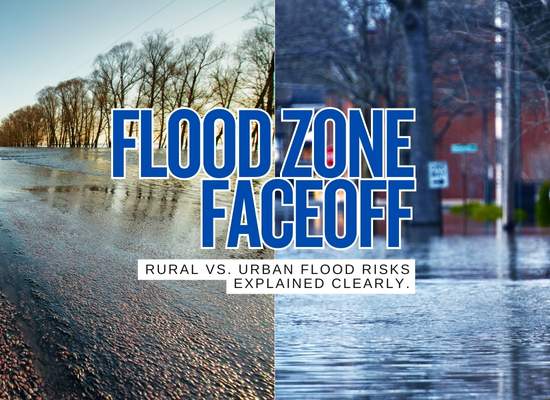
Floodwaters don’t discriminate—but where they strike makes a huge difference. Urban flash floods can turn streets into rivers in minutes, while rural flooding spreads wide and slow, swallowing farmland and isolating communities. Both types are dangerous—but in very different ways.
To understand which poses a greater threat, we need to look at the nature of rural flooding first.
🌾 Pros of Rural Flooding (Relatively Speaking)
- Slower Onset
Rural floods usually rise over hours or days, giving people more time to prepare, evacuate, or move valuables. - More Open Land to Absorb Water
Fields, forests, and pastures can help soak up excess water, reducing some pressure on drainage systems. - Lower Immediate Human Density
Fewer people live in close proximity, which can mean fewer direct casualties compared to urban flash floods. - Less Infrastructure at Risk
There’s often less critical infrastructure like subways, high-rises, or power grids in immediate danger.
🌾 Cons of Rural Flooding
- Widespread Property Damage
Flooded farmland, livestock loss, destroyed rural homes, and waterlogged machinery can lead to severe long-term economic damage. - Limited Emergency Services
Rural areas often have fewer rescue resources, slower response times, and limited evacuation routes. - Infrastructure Gaps
Washed-out roads, collapsed bridges, and power outages can leave entire communities stranded for days or weeks. - Water Supply Contamination
Floods can overwhelm wells and septic systems, making water unsafe and hard to replace quickly. - Insurance Gaps
Many rural residents may lack flood insurance, especially in areas not previously designated high-risk by FEMA.
🏙️ Pros of Urban Flash Flooding (Relatively Speaking)
- Faster Emergency Response
Cities generally have more first responders, rescue equipment, and emergency protocols already in place. - More Real-Time Alerts
Urban areas often benefit from advanced weather monitoring, mass notification systems, and traffic rerouting tech. - Dense Infrastructure for Evacuation
Sidewalks, subways, and multilane roads may make it easier to evacuate large numbers of people quickly—if they’re not overwhelmed. - Critical Services Nearby
Hospitals, shelters, and supply stores are usually within closer reach during recovery efforts.
🏙️ Cons of Urban Flash Flooding
- Extremely Rapid Onset
Water can rise within minutes due to poor drainage and excessive runoff—trapping people in cars, subways, and buildings. - High Population Density
More people in tight spaces means a higher risk of injuries, fatalities, and chaos during emergencies. - Overloaded Infrastructure
Sewers, storm drains, and power systems can quickly fail, leading to backups, blackouts, and widespread disruption. - Traffic Gridlock
Congested roads become impassable fast, delaying rescue efforts and creating additional hazards. - Property and Economic Impact
Flash floods can damage homes, businesses, vehicles, public transit, and underground infrastructure—often with high insurance claims.
🏆 Rural Flooding vs. Urban Flash Flooding: What’s More Dangerous?
Flooding is one of the most destructive natural events on Earth, but not all floods hit the same way—or with the same consequences. Rural and urban areas experience flooding in drastically different ways, shaped by geography, infrastructure, and population density. So when we ask “Which is more dangerous?” we’re really asking: Dangerous to whom—and in what way?
Let’s unpack the realities behind each flood type.
🌾 Rural Flooding: Slow Burn, Long Tail
Rural flooding is often caused by river overflow, sustained rainfall, or levee breaches. These floods move slower, giving families more time to prepare or evacuate. But the damage can be enormous.
Entire communities can be stranded for days. Roads and bridges wash away. Crops drown. Livestock is lost. In some cases, towns can disappear economically if the recovery is slow or insurance is lacking.
The real danger in rural flooding lies in infrastructure gaps. Emergency services may be hours away. Power restoration and clean water can take weeks. And because fewer homes are packed into the floodplain, the issue tends to get less media attention—even if the devastation is profound.
🏙️ Urban Flash Flooding: Fast, Violent, and Unforgiving
Urban flash floods are the most visually terrifying. One moment the streets are wet—the next, they’re rivers. Poor drainage, paved surfaces, and overloaded sewer systems mean rain has nowhere to go. The result: cars floating, subways flooding, power lines shorting, and chaos in the streets.
Because people are tightly packed in urban settings, there’s a much higher chance of immediate injury or death. Floodwaters can trap people in basements, parking garages, or public transit. Vehicles stall out. Streets become impassable. In the worst cases, city systems collapse under the pressure, and recovery costs skyrocket.
Flash floods are especially dangerous because they come with little or no warning, and decisions made in seconds can mean life or death.
⚖️ So… Who Wins (or Loses Worse)?
Here’s the truth:
- Urban flash flooding is more dangerous in the short term. It hits fast, causes more direct casualties, and disrupts daily life in densely packed areas.
- Rural flooding is more dangerous in the long term. It devastates livelihoods, isolates communities, and often lacks the fast-moving resources needed for quick recovery.
🎯 Final Verdict
➡️ Urban flash flooding wins for sheer immediate danger to human life.
➡️ Rural flooding wins (or loses) for economic and infrastructure devastation over time.
The worst-case scenario? When the two overlap—suburban sprawl near rivers, under-prepared towns on the edges of major cities, or outdated drainage in growing communities. In a warming climate, both are becoming more frequent, and both demand better planning, smarter infrastructure, and informed communities.