
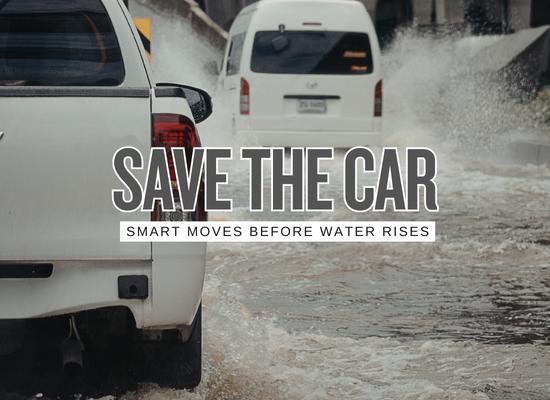
When a flood is on the way, vehicles get lost for surprisingly small reasons: low parking spots that become bowls, water rising into door sills, electrical systems that do not tolerate contamination, and rushed last-minute driving through water. The most effective protection usually comes down to one decision made early: get the vehicle to higher ground and keep it there until roads are clearly safe. Federal safety guidance strongly warns against driving into floodwater, and consumer agencies warn that flood damage can be hidden and severe.
Protect the vehicle before the water chooses for you
Flood damage often becomes total-loss damage because water reaches wiring, modules, interiors, and safety systems. The most reliable move is early relocation to higher ground, followed by a short checklist that reduces preventable losses.
- Choose a location that is clearly higher than nearby streets and drains, not just a different spot on the same block.
- Skip underpasses, dips, and lots that routinely pond after heavy rain.
- A multi-level garage works best when the entrance roads are not flood-prone.
- Floodwater hides washouts and debris, and it can move vehicles quickly.
- Use established flood safety messaging: turn around, do not drive through water.
- Cabin water can contaminate wiring under carpet, modules, seat motors, airbags, and connectors.
- Shallow water can still be severe because it carries dirt and salts that accelerate corrosion and electrical faults.
- A ramp down to parking, a low apartment lot, or a street next to a ditch can trap water even if the neighborhood looks fine.
- Pick a place where runoff has a clear path away.
- Park on the highest part of the property, angled so likely flow routes go around, not directly at, the vehicle.
- Avoid parking tight against a curb or storm drain where water concentrates.
- Vehicle safety agencies warn flood damage can be extensive and hidden. Avoid starting or driving until inspected.
- Starting after water ingestion can damage engines and electrical systems further.
- Capture current mileage, exterior angles, existing dents, and the parking location.
- If relocation is not possible, a quick baseline helps separate storm damage from prior wear.
- If an EV or hybrid has been in floodwater, treat it as higher risk until assessed, and keep it away from structures when possible.
- Industry and consumer guidance highlights additional precautions for EVs after flooding.
- Remove garage remotes you need, work gear, sports bags, registration paperwork stored in the glove box, and anything that wicks water.
- For charging cables and accessories, store them higher and dry.
- A fuller tank gives routing flexibility without needing to detour into low-lying commercial corridors during heavy rain.
- Do this well before intense weather arrives.
- High ground under weak trees can still result in a totaled vehicle from limb impact.
- Pick a spot with fewer overhead hazards and better sightlines.
- Floodwater rises from below, carries grit, and can pin a cover against paint and trim.
- If water reaches the vehicle, a cover rarely prevents intrusion and can complicate drying.
- Upper levels reduce risk from entrance runoff and localized pooling near ramps.
- Choose a level that remains accessible without crossing flood-prone streets.
- Consumer protection agencies warn about hidden flood damage and advise buyers to watch for signs.
- Even after drying, corrosion and electrical faults can appear later.
- Flood damage to vehicles is typically handled under comprehensive auto coverage, not liability only.
- Knowing your coverage helps you decide between relocation costs and risk exposure.
| Parking choice | Usually solid | Common trap |
|---|---|---|
| Upper level of a garage | Protection from street ponding and entrance flow | Access roads flood, trapping you in |
| High open lot or ridge | Simple, visible, less pooling | Falling branches and wind debris |
| Home driveway high spot | Fast, no travel risk | Still low compared to nearby drain routes |
| Low garage ramp or basement parking | Rarely a good flood choice | Fills like a bowl |
Vehicle Flood Plan Builder
30-second summary
Bottom-Line Effect
If you can move the vehicle to clearly higher ground before roads become risky, do that first. Most other steps are secondary layers that help only after you have made the location decision.