
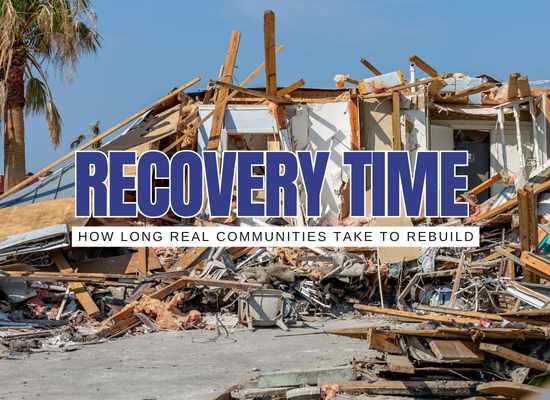
Floods can devastate a community in a matter of hours, but recovery takes months, years, or even decades. The true timeline depends on many factors, the scale of the flooding, population density, available funding, government response, infrastructure resilience, and community support systems.
In this guide, we examine 10 major floods over the last decade and track how long it took each region to recover. Some rebuilt stronger. Others are still picking up the pieces.
🌪️ 1️⃣ Hurricane Harvey – Houston, Texas (2017)
- Flood Duration: August 25–29, 2017
- Rainfall: Over 50 inches in some areas
- Damage: $125 billion in damages
- Displaced: 30,000+ people
- Recovery Timeline: Ongoing (8+ years)
Houston has made major progress, including rebuilding homes, infrastructure upgrades, and flood mitigation projects. However, thousands of residents struggled for years with delayed FEMA aid, insurance disputes, and housing shortages. In 2025, certain neighborhoods remain vulnerable due to inadequate drainage improvements.
🌧️ 2️⃣ Western Europe Floods – Germany & Belgium (2021)
- Flood Duration: July 12–15, 2021
- Rainfall: 4+ inches in 24 hours
- Damage: Over €30 billion (Germany)
- Casualties: 200+ dead
- Recovery Timeline: 2–4 years (partial)
Entire villages were swept away in western Germany’s Ahr Valley. Cleanup and infrastructure repairs moved quickly with strong federal support, but emotional recovery and housing reconstruction took far longer. By mid-2025, many homes were rebuilt, though historical structures and transit systems remain under restoration.
🌧️ 3️⃣ Myanmar Monsoon Floods (2015)
- Flood Duration: July–August 2015
- Rainfall: Heavy monsoons intensified by Cyclone Komen
- Damage: 1.6 million people affected
- Homes Damaged: Over 15,000 destroyed
- Recovery Timeline: 4–5 years (rural areas slower)
Recovery was complicated by Myanmar’s limited infrastructure, rural isolation, and political instability. While urban centers received aid and were restored within 2 years, many rural regions required long-term agricultural and housing support. International NGOs played a crucial role in filling resource gaps.
🌪️ 4️⃣ Cyclone Idai – Mozambique (2019)
- Flood Duration: March 2019
- Rainfall: More than 23 inches in 4 days
- Damage: Estimated $2.2 billion across Mozambique, Zimbabwe, Malawi
- Casualties: Over 1,300 lives lost
- Recovery Timeline: 5+ years (partially recovered)
Cyclone Idai left Beira and surrounding areas nearly 90% destroyed. Rebuilding was hampered by limited financial resources, destroyed roads, and follow-up health crises including cholera outbreaks. By 2024, many basic services were restored, but housing, agriculture, and economic stability remain in recovery mode.
🌧️ 5️⃣ Kerala Floods – India (2018)
- Flood Duration: August 2018
- Rainfall: 116% above average monsoon levels
- Damage: Over $5 billion in losses
- Displaced: 1 million+ people
- Recovery Timeline: 3–4 years (substantial progress)
The floods were the worst Kerala had seen in nearly a century. Relief efforts were swift, with local communities, government agencies, and international aid working together. By 2022, most infrastructure was rebuilt, and tourism returned, though some agricultural and housing losses remained unresolved in rural areas.
🌧️ 6️⃣ Eastern Australia Floods (2022)
- Flood Duration: February–March 2022
- Rainfall: Record-breaking deluge across Queensland and New South Wales
- Damage: Over AUD $5 billion
- Homes Affected: 20,000+ homes flooded
- Recovery Timeline: 1–2 years (urban areas faster)
Cities like Brisbane and Lismore saw severe flooding, with some neighborhoods underwater for days. Urban centers saw quicker recovery due to strong insurance infrastructure, but emotional and mental health effects lingered. Rural and regional areas required longer rebuilding timelines and additional support.
🌊 7️⃣ Midwest Floods – USA (2019)
- Flood Duration: March–May 2019
- Rainfall: Record snowfall melt and spring storms
- Damage: Over $6.2 billion
- States Affected: Nebraska, Iowa, Missouri, others
- Recovery Timeline: 3–5 years (varied by region)
The 2019 floods overwhelmed levees and saturated farmland across the central U.S. Thousands of homes were lost, and agriculture was severely impacted. While federal aid helped restore infrastructure, farming operations in some areas took multiple seasons to recover. Many small towns faced slower, underfunded rebuilds.
🌧️ 8️⃣ Jakarta Floods – Indonesia (2020)
- Flood Duration: February 2020
- Rainfall: Over 14 inches in one day
- Damage: Billions in infrastructure and housing
- Displaced: 60,000+ people
- Recovery Timeline: 2–3 years (still vulnerable)
Jakarta floods frequently due to sinking land, dense urban development, and poor drainage. The 2020 event submerged large parts of the capital. Emergency response was swift, but longer-term recovery included clearing debris, resettling families, and upgrading infrastructure. Risk remains high without systemic flood prevention upgrades.
🌊 9️⃣ Libya Floods – Derna (2023)
- Flood Duration: September 2023
- Trigger: Collapse of two dams following Storm Daniel
- Damage: Estimated 30% of Derna destroyed
- Casualties: Over 10,000 confirmed dead
- Recovery Timeline: Ongoing (projected 5–10 years)
One of the deadliest floods of the decade, the disaster in Derna left entire neighborhoods washed into the sea. Recovery has been slow due to political instability, lack of infrastructure, and limited international access. As of 2025, the city is still in the early stages of long-term reconstruction.
🌧️ 🔟 British Columbia Floods – Canada (2021)
- Flood Duration: November 2021
- Cause: Atmospheric river event with landslides
- Damage: Over CA$9 billion
- Impact: Key highways and rail lines destroyed
- Recovery Timeline: 2–3 years (mostly restored by 2024)
Floods and mudslides severed access between Vancouver and the interior, crippling supply chains. Rapid government response helped reopen key routes within months. By 2024, most public infrastructure was operational, though full agricultural and ecosystem recovery remains ongoing in parts of the Fraser Valley.
We’ve seen firsthand that flood recovery is never just about draining water and fixing roads. It’s about rebuilding lives, restoring trust, and rethinking how we protect communities going forward. Some cities bounced back in a few years. Others are still struggling to recover.
We’ve put this guide together not just to document what happened, but to help future planning, response teams, and local leaders understand what to expect. If your community is facing a similar challenge, we hope these lessons offer clarity, urgency, and maybe even a little hope.
We’ll continue tracking these stories, because the flood may end in days, but the recovery takes far longer.