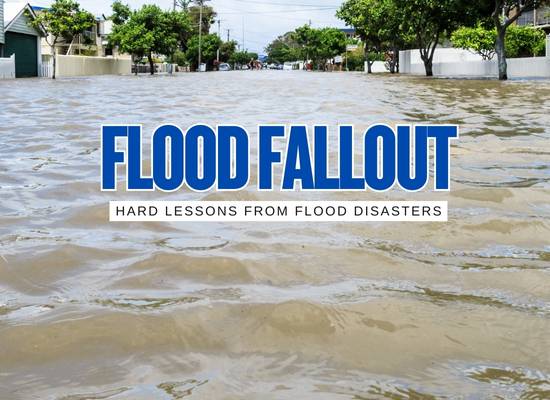
After a flood, the damage left behind is obvious. Mud-choked homes, ruined roads, and families trying to salvage what they can. But beyond the visible destruction, every major flood reveals something deeper. Patterns. Failures. Missed chances. These events aren’t just natural disasters, they’re stress tests that show what systems work and what falls apart. From rural river towns to major coastal cities, the lessons are piling up. Some have already cost lives.
📅 2025 Major U.S. Flood Events
- Jan 30 – South & Texas Plains: Heavy rain triggered flash flood warnings across 10 states, including Dallas–Fort Worth. Millions were affected as roads and lowlands submerged.
- Feb 15–16 – Southeast Floods: Intense storms caused flash floods and tornadoes in Kentucky, West Virginia, Tennessee, Georgia, and Virginia. At least 18 lives lost.
- Apr 2–7 – Mid‑South & Midwest: A slow-moving storm caused severe flash flooding west of the Mississippi. Storms dropped over 6″ of rain in parts of Arkansas, Missouri, Kentucky, and Tennessee.
- May 13–18 – Mid‑Atlantic Floods: An atmospheric river event dumped up to 12″ of rain from North Carolina through D.C. to Pennsylvania. Flash flood emergencies and school evacuations were reported.
- Jun 14 – Northern West Virginia: Flash floods in the Wheeling area killed at least 9 and inundated several communities after sudden downpours.
- Jul 4–7 – Central Texas (Hill Country): Remnants of Tropical Storm Barry dumped 10–20″ of rain. Over 120 lives were lost, including dozens at a riverside camp.
- Jul 8 – Ruidoso, NM: A fast-moving thunderstorm dropped 3–3.5″ of rain in 90 minutes over burn-scar terrain. Flash floods killed at least 3 people, including two children.
1️⃣ A warning only works if people take it seriously
📢 Even the loudest siren or boldest alert won’t help if people ignore it — or never hear it. Across recent floods, early warnings failed not because the tech broke, but because trust and timing were missing.
- 🏚️ In the 2022 Eastern Kentucky floods, dozens of residents said no alerts ever came. One survivor recalled thinking, “It was just rain. Like always.”
- 🚗 During Hurricane Harvey, Houston chose not to issue a full evacuation. Officials feared traffic chaos. Afterward, more than 100 people had died — many trapped in flooded cars and homes.
- 📱 People tune out alerts if past ones felt like false alarms or were too vague to act on.
- 📵 Elderly residents, isolated communities, and homes without reliable phone service often never receive app-based warnings.
- ❌ Some hear the alert but don’t have a clear evacuation plan — so they freeze instead of move.
- 🤝 Places that built trust in local leaders and had backup communication (like door-to-door outreach or neighborhood captains) had better response rates.
2️⃣ Elevation doesn’t always mean safety
📍 Many families think they’re safe because their home sits on a hill, a ridge, or outside the usual flood zone. But in major events, water doesn’t follow old maps — and elevation alone can give a false sense of security.
- 🌊 During the 2021 Tennessee flash floods, homes thought to be “out of reach” were overwhelmed by water that rose faster than anyone expected. Some had only 15 minutes to react.
- 📈 Changing land use — like paving over fields or new construction upstream — can redirect water in unpredictable ways.
- 🗺️ FEMA maps are often outdated or overly general. A “low-risk” label doesn’t mean “no risk.”
- 🧱 Elevated homes still suffer damage if access roads, vehicles, or utilities are wiped out.
- 🔌 In many areas, backup power and clean water were cut off even if the house stood dry, forcing families to evacuate anyway.
⛑️ The takeaway: safe ground is more than just height — it’s about planning for how water will move, not how it used to.
3️⃣ Help may not arrive when you expect it
🕰️ In the chaos of a major flood, people often assume emergency services will reach them quickly. But storms can block roads, overwhelm dispatch lines, and stretch responders far beyond capacity.
- 🚑 In Louisiana during Hurricane Ida, floodwaters and debris blocked dozens of roads. Some rescue crews couldn’t reach stranded families for over 24 hours.
- 🛶 In rural areas, neighbors used kayaks and jon boats to rescue each other while waiting for formal response.
- ☎️ During severe flooding in New Jersey (2021), 911 systems were jammed, and hundreds of calls went unanswered for hours.
- 🌐 Downed cell towers and power lines often cut off entire neighborhoods from the outside world.
- 🧭 Even National Guard and FEMA responders have to prioritize based on life-threatening emergencies — which means lower-risk homes may wait much longer.
💡 Many of the best outcomes came from communities that trained for self-reliance. Knowing your neighbors, having a boat, or even just a hand-crank radio made a real difference.
4️⃣ Recovery takes years — not weeks
🧹 Once the water drains, the real work begins. But many families aren’t prepared for how long it takes to get back to normal — and how lonely that process can feel.
- 🧾 After the 2016 Baton Rouge flood, many residents were still living in trailers or stripped-down homes two years later, caught in red tape and insurance disputes.
- 🏚️ In parts of Houston after Harvey, entire neighborhoods waited months for mold remediation and basic repairs, especially renters and low-income households.
- 💵 Insurance payouts are often far below rebuilding costs. Some don’t qualify for aid at all.
- 🏦 Small businesses hit by floods frequently close for good. Without foot traffic or working utilities, many simply never recover.
- 😔 Mental health strain builds over time — especially for families navigating FEMA forms, gutting homes, and trying to keep kids in school.
🛠️ True flood recovery is about more than fixing walls. It’s a long, uneven road filled with paperwork, delays, and hard choices.
5️⃣ Most communities rebuild the same way — and stay just as vulnerable
🔁 Time after time, flood-hit areas return to the same patterns — same building codes, same drainage, same vulnerabilities. It’s easier in the short term, but it often sets the stage for future disasters.
- 🧱 In Missouri, some towns rebuilt homes in the exact same floodplain spots hit three times in 25 years — simply because that’s where the lots were.
- 📝 Building codes are rarely updated fast enough, and resistance to change is common, especially when budgets are tight.
- 🏗️ Buyout programs (offering to purchase high-risk homes and convert land to green space) often stall due to local pushback, delays, or lack of funds.
- 💬 Many residents feel attached to their neighborhoods and resist relocation, even after back-to-back floods.
- ⚖️ In some cases, rebuilding “as-is” disqualifies homeowners from future aid — but they aren’t told that upfront.
🌱 Communities that chose to adapt — through better zoning, higher elevation standards, or creating wetlands — saw stronger outcomes in later storms.
Every flood leaves behind more than debris. It reveals where the cracks were — in our systems, in our planning, and sometimes in our thinking. These lessons are hard-earned, often paid for with homes, businesses, and lives.
Some communities are beginning to rethink how they prepare and rebuild. Others continue to gamble, hoping the next storm will pass them by. But the floods keep coming, and the water doesn’t care about ZIP codes, old maps, or past luck.
The best time to learn from disaster is before it hits. The second-best time is now.