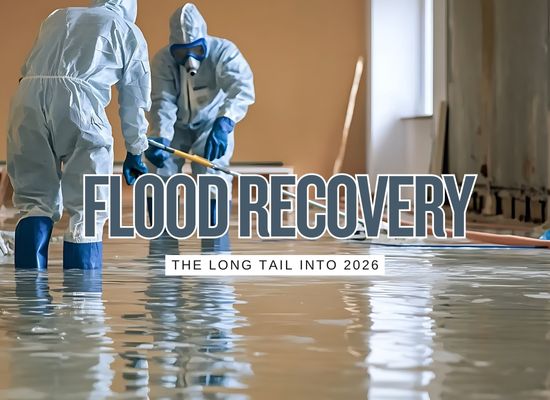
Flood recovery does not end when the water recedes. For many communities hit in 2025, the real grind started weeks later: paperwork, contractors, mold, temporary housing, damaged roads, and the long wait for permanent projects. Here is a practical, plain-language update on major 2025 U.S. flood events and what “recovered” usually looks like right now.
- IA (Individual Assistance): help for eligible households (home repair, personal property, temporary housing, related needs).
- PA (Public Assistance): reimburse eligible public entities and certain nonprofits for debris removal, emergency measures, and infrastructure repair.
- SBA disaster loans: separate process; often used for larger rebuild needs when grants do not cover the gap.
| Event | Where | Incident window | Assistance type | Status snapshot |
|---|---|---|---|---|
| Texas Hill Country summer storms | Texas | Jul 2 to Jul 18, 2025 | IA + PA | IA application window ended (late 2025) |
| Lower Mississippi Valley spring flooding cycle | KY, TN, AR | Apr 2 to Apr 5, 2025 (core) | IA + PA (varies) | Most household deadlines passed; PA work continues |
| New Mexico summer flooding + landslides | New Mexico | Jun 23 to Aug 5, 2025 | IA + PA | IA application window ended (late 2025) |
| Milwaukee-area August floods | Wisconsin | Aug 9 to Aug 12, 2025 | IA + PA | IA deadline was Nov 12, 2025; appeals ongoing |
| Nebraska August storms and flooding | Nebraska | Aug 8 to Aug 10, 2025 | PA + (IA in parts) | FEMA IA deadline ran into early Jan 2026 |
| Tropical Depression Chantal | North Carolina | Jul 6 to Jul 7, 2025 | PA only federally; state tracked IA | IA deadline Sept 23, 2025; PA projects active |
- The FEMA Individual Assistance application period ran through September 28, 2025 (extended), and is now shown as past due on FEMA’s disaster page.
- If you already applied, the practical next steps are usually: submit missing documents, respond to FEMA requests, and use the appeal window if the determination does not match the damage reality.
- Public infrastructure and debris reimbursement work typically stays active for months to years after the event, especially for road washouts, drainage failures, and public facility repairs.
Repair-cost reality: what “after the deadline” usually looks like
- Insurance claims: re-inspections, supplemental claims, and contractor estimate updates often run well beyond the FEMA IA window.
- Mold and materials: drying, remediation, and material lead times are often the biggest schedule drivers after a summer flood.
- Mitigation upgrades: communities and homeowners frequently pivot to practical future-proofing once the first rebuild is underway (grading, drainage, backflow, sump redundancy, elevated utilities).
- The FEMA IA application deadline was set for August 19, 2025 and has passed.
- Agricultural recovery often runs longer than “headline recovery” due to planting cycles and land restoration. Separate federal and state programs can still be active even after FEMA IA closes.
- Infrastructure repair (culverts, small bridges, road base failures) is typically the long pole in the tent for many counties.
What tends to be “still unresolved” months later
- Hidden moisture in basements and crawlspaces that becomes a mold and indoor-air issue later in the year.
- Repeated cleanup costs from secondary storms when temporary fixes (sandbags, pumps, tarps) become semi-permanent.
- Contractor scarcity and price volatility, especially for drainage, concrete, and foundation work.
- The FEMA IA application deadline was June 24, 2025 and has passed.
- Landslide-related home damage can create slower repair timelines than straightforward water intrusion, because stabilization and engineering often come first.
- Even when IA closes, households commonly cycle through: insurance supplementals, contractor scope changes, and appeals if damage documentation improves over time.
- The FEMA IA application deadline was July 21, 2025 and has passed.
- Long incident windows often mean “multiple damage rounds” (first flood, then another storm) which can complicate documentation if repairs started between events.
- Common 2026 carryover work: drainage corrections, repaired road shoulders, culvert upsizing, and home elevation planning for repeat-loss properties.
- The FEMA IA application deadline was July 11, 2025 and has passed.
- Flooding paired with wind damage often produces “mixed claim friction” where roof and water problems blend, and insurers require clearer separation of causes.
- Public repair work usually extends into 2026 for drainage channels, road base failures, and water control facilities.
- FEMA extended the IA application period to October 15, 2025, and FEMA now shows the last day to apply has passed.
- Landslide and mud impacts often require phased repairs: stabilize first, rebuild second.
- If you are in documentation mode: keep contractor photos, moisture readings, itemized receipts, and any local inspection notes, because those are often the difference-makers in appeals and supplemental claims.
- The application deadline for FEMA IA was November 12, 2025. Some late applications may still be possible in limited circumstances, but the default window has ended.
- Local reporting indicates significant FEMA dollars had already been distributed in Milwaukee County by early November, and officials were actively urging remaining households to apply before the deadline.
- Typical 2026 carryover work after an urban flood: basement gut jobs, electrical replacement, sewer lateral and backflow fixes, and repeated moisture issues in multi-unit buildings.
Fast appeal checklist (plain English)
- Write 6 to 10 sentences: what happened, where the water went, and what became unsafe or unusable.
- Attach proof that is hard to argue with: contractor estimate, inspection notes, photos, receipts, and any “before vs after” context.
- Match each document to a need (drywall, electrical, flooring, furnace, accessibility, temporary housing).
- FEMA communications for this disaster show a key household-facing deadline landing in early January 2026 (Jan. 8 referenced in FEMA messaging), meaning this one stayed “live” longer than many 2025 events.
- State-level recovery notes highlight multi-year PA grant performance windows for public repairs, which is normal for infrastructure-heavy events.
- If you missed the IA window: keep records anyway. Local recovery programs, insurance, and SBA loans (where applicable) can still hinge on the same documentation quality.
- Federal documentation frames this declaration as Public Assistance only, which puts the emphasis on debris, emergency measures, and public facility repairs rather than direct household grants.
- North Carolina’s public safety agency posted an Individual Assistance application deadline of Sept. 23, 2025 for the event, alongside PA process steps and timelines.
- Practical reality in a PA-driven recovery: residents often feel “nothing is happening” while governments and utilities are working projects that take longer to procure, scope, and obligate.
- SBA physical damage loan deadlines for this event were published with a January 26, 2026 physical deadline and a later EIDL deadline, meaning this was still within the loan window in early January 2026.
- This is a common “late-stage” recovery pattern: grants are time-boxed earlier, but loan programs and multi-year public work continue longer.
- SBA published a July 28, 2025 physical loan application deadline for this event, with an EIDL deadline stretching further out.
- Winter flood aftermath tends to show up later in the year as foundation moisture, delayed material failure, and mold issues emerge after the first warm season.
- SBA documentation lists a March 26, 2026 physical loan application deadline for this event, which means the loan window can remain relevant deep into the following year.
- This is a classic “slow-rebuild” setup: multiple rounds of spring storms can produce staggered repairs, with drainage and basement solutions often postponed until contractors are available.
Flood recovery is a long tail: most 2025 household application windows have closed, but appeals, insurance supplementals, contractor-driven delays, and public infrastructure work often continue well into 2026 and beyond. If you want, I can expand this into a “state-by-state tracker” format (still mobile-friendly) that covers additional FEMA 2025 flood-related declarations beyond this major-events list.