
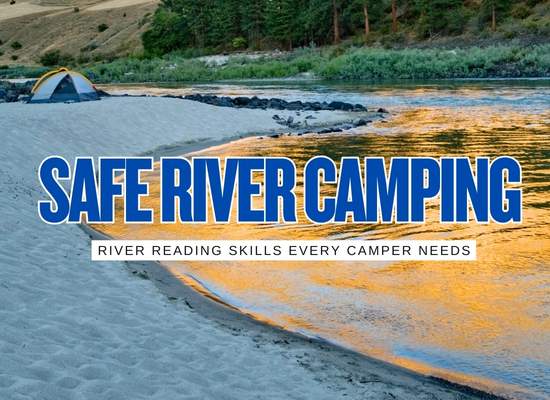
Camping near a river can feel like the perfect outdoor dream, peaceful water, endless skipping stones, and maybe even a trout or two. But rivers also come with risks. What looks calm in the afternoon can turn dangerous overnight. Before you drop your gear and pitch your tent, it pays to understand the river in front of you. These seven strategies will help you camp smarter, safer, and avoid waking up in a soggy sleeping bag or worse.
🌊 Did You Know?
Most flash flood deaths happen near rivers, and 80% occur at night when water rises silently and campers are asleep. Even a rise of 6 inches can sweep away gear — and worse, tents with people inside.
1️⃣ Check for Upstream Rainfall, Not Just Local Forecasts
It might be sunny where you are, but if it’s been raining heavily 50 miles upstream, that river could be carrying a surge your way. A river’s rise isn’t always tied to your sky. Water flows downhill, and fast.
Before setting up camp:
- Open a radar or weather app and scan the region upstream, not just overhead
- Check nearby watershed areas and recent rainfall totals
- Look at river gauges if available (NOAA and USGS have real-time data)
You’re trying to answer one key question: Has this river had to deal with a lot of water lately? If the answer is yes, it might not be done rising yet.
This step alone can prevent you from settling into what looks like a peaceful spot but is actually a few hours away from becoming a shallow lake.
2️⃣ Identify the High Water Mark
Nature leaves clues if you know where to look. Rivers almost always show where they’ve been during past floods or recent surges. You just have to read the signs.
Scan the area around the river for:
- Piles of leaves, branches, and debris caught in tree trunks
- Discolored bark or mud lines on trees and rocks
- Flattened grass or broken brush running parallel to the river
The high water mark tells you where the river already reached recently. Set up camp below that line, and you’re betting against the river. That’s not a smart wager, especially during unpredictable weather seasons.
Aim to pitch your tent well above the most recent high water sign. If you have to climb uphill even slightly to reach your camp, that’s a good thing.
3️⃣ Scan the Terrain for Elevation and Drainage
Where you place your tent matters just as much as how close it is to the river. Even if the water stays put, the surrounding land can betray you. Some areas funnel water like a chute, turning dry patches into sudden streams during overnight storms.
Look for ground that:
- Slopes gently away from the river
- Sits higher than nearby paths, creeks, or indentations
- Is not located in a bowl, dip, or “natural basin” where water collects
Avoid flat spots that look ideal but don’t drain well. If you’re unsure, look for clues like washed-out grass, miniature channels carved in the soil, or standing puddles nearby.
When possible, walk a small loop around your intended camp area. If you notice natural runoff paths or drainage ditches, move your tent uphill. It might mean a little more work carrying your gear, but it could save you from a soaked tent or worse if rain shows up uninvited.
4️⃣ Assess Bank Stability and Distance
That scenic view from the edge of the riverbank might look perfect in daylight, but not all banks are created equal. Some collapse with little warning. Others become slick and dangerous as water levels shift.
Here’s what to watch for:
- Avoid soft or freshly eroded soil along the edge
- Look for cracks, exposed tree roots, or places where chunks have already fallen away
- Choose a spot set back from the river by at least 100 feet, especially if there’s rain in the forecast
If you stand on the bank and the ground gives slightly underfoot, that’s a warning sign. Even if the water level doesn’t rise much, a weakened bank can crumble under the weight of your gear or a few heavy steps.
A safe campsite is always one that prioritizes solid footing and a comfortable buffer between your tent and the river’s mood swings.
5️⃣ Observe River Speed and Sound
Rivers have a voice if you listen. Fast-moving water is louder, more aggressive, and usually indicates heavy flow from upstream. Slow water may seem safer, but it can still rise quietly and steadily, especially overnight.
Here’s what to pay attention to:
- Loud, churning water means stronger current and faster rise potential
- Murky or sediment-heavy water often signals upstream rain or runoff
- Look for foam lines or floating debris — if they’re moving quickly, so is the river
Take a moment to sit near the bank and simply listen. Rivers that were calm two hours ago can pick up speed as distant rainfall moves downstream. If the water is getting louder or faster, especially in the evening, that’s your cue to stay alert and sleep farther back from the edge.
6️⃣ Mark the Water’s Edge and Monitor It
The river may look peaceful now, but what will it look like at 2 a.m.? You don’t need a sensor or a gauge. A rock and a stick can tell you everything.
Here’s a simple method:
- Place a stick upright at the water’s edge when you arrive
- Recheck every hour or two, especially if clouds are rolling in
- If the water moves up the stick or your marker is gone — it’s time to relocate
Even a small rise of an inch or two per hour adds up quickly overnight. If you’re unsure, err on the side of caution and move up the slope. Water doesn’t ask permission when it decides to rise.
7️⃣ Know the Nearest Exit Route
The best campsite in the world doesn’t help you if you can’t leave safely. Before you settle in, identify a clear path out — one that won’t cross flood-prone areas, dry creeks, or unstable trails.
Make sure:
- Your path out is uphill or away from any water channels
- You won’t have to cross streams that could flood
- You can pack up and move quickly in the dark if needed
Walk the exit route while it’s still light. If you’d have trouble carrying your gear out fast, rethink your spot. It’s much easier to choose a safer place now than it is to grab your tent mid-downpour.
Reading a river is part instinct, part observation, and part respect. Most of the time, the water stays where it belongs. But when it doesn’t, you’ll be glad you took the time to read the signs and camp smart.
Before your next riverside adventure, run through this checklist. Check the weather upstream. Scan the terrain. Mark the water. And always, always camp where the river can’t reach you.
A good campsite keeps you dry. A great one keeps you safe.