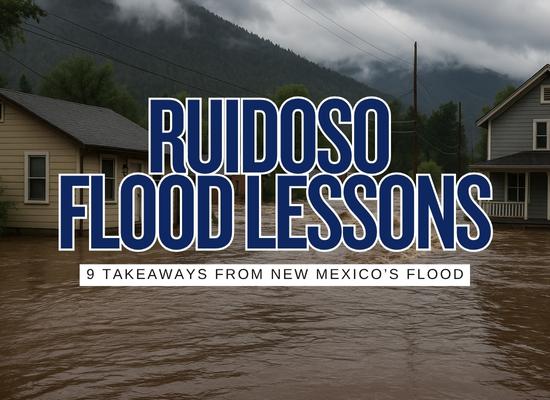
On July 8, 2025, flash floods struck Ruidoso, caused by intense monsoon rains over wildfire burn scars, swelling the Rio Ruidoso to record-breaking levels, sweeping homes downstream, and tragically killing a man and two children. As rescue teams raced against time, the devastation underscored key lessons we must learn before the next crisis hits.
1️⃣ Wildfire-Scarred Hills Turned Into Water Slides
In Ruidoso, it wasn’t just rain — it was runoff with nowhere to go. The area had suffered major wildfire damage in 2024, leaving the soil scorched, compacted, and unable to soak up water. So when the monsoon rains hit on July 8, 2025, they didn’t just seep into the ground. They barreled downhill in torrents.
How it played out:
- The burn scars acted like concrete, sending water straight into town
- Streets flooded within minutes of the heaviest rainfall
- Residents had virtually no time to prepare or escape
What stuck with people:
Wildfires leave behind invisible dangers. Even when skies are clear, the ground stays fragile — and a normal rainstorm can turn deadly fast.
2️⃣ The River Rose Higher Than Anyone Expected
Locals are no strangers to flash floods — but this one broke records. The Rio Ruidoso surged past the 15-foot “major flood” mark and peaked above 20 feet, pushing water far beyond its usual banks and deep into residential neighborhoods.
What residents saw:
- Walls of water rushing through streets and yards
- Entire houses lifted and carried away
- A flood that moved faster and reached farther than anyone predicted
Why this hit hard:
People thought they were far enough from the river to be safe. They weren’t. The flood line extended into areas no one expected, changing how future risk will need to be calculated.
3️⃣ Whole Homes Were Swept Away
It wasn’t just water in basements or ankle-deep streets — entire buildings were picked up and carried downstream like rafts. Social media filled with terrifying videos of houses being dragged away by the current.
What really shook the community:
- Homes that had stood for decades were gone in minutes
- Even elevated or well-built structures didn’t stand a chance
- The power of the water stunned first responders and residents alike
The takeaway:
Flood risk isn’t always about elevation or insurance zones — it’s about momentum. Once water starts moving with force, anything in its path is fair game.
4️⃣ Rescues Happened Fast — Because They Had To
As the floodwaters surged, emergency crews jumped into action with boats, trucks, and helicopters. Over 85 swift-water rescues were carried out in just one day, with people trapped in vehicles, rooftops, and even inside their homes.
What unfolded in real time:
- Some families were rescued by neighbors while waiting for help
- First responders worked through debris, fast currents, and dangerous terrain
- The speed of the flooding meant some people were caught completely off guard
Why this matters now:
It became clear how quickly a “watch” can turn into a life-threatening situation. For some, it was a difference of five minutes between safety and needing rescue.
5️⃣ Streets, Culverts, and Roads Weren’t Ready
Parts of Ruidoso’s infrastructure simply couldn’t handle the volume of water. Culverts backed up with debris. Roads eroded or disappeared altogether. Vehicles were stranded, homes became islands, and entire areas were cut off.
What went wrong:
- Storm drains clogged almost instantly
- Some roads crumbled or collapsed
- In many areas, there were no alternative evacuation routes
What it exposed:
Even small mountain towns need flood-resilient infrastructure. Routine maintenance and upgraded culverts could have redirected some of the water — but many systems were outdated or blocked when it mattered most.
6️⃣ No Town-Wide Siren Left People Guessing
Ruidoso does not have a village-wide emergency siren. During the flood, officials had to rely on door-to-door warnings, social media updates, and word of mouth to alert residents.
What people experienced:
- Some had no idea a flood was coming until water was at their door
- Elderly residents and those without cell phones were especially vulnerable
- The lack of a central alert system delayed critical evacuations
The wake-up call:
Without a universal, unmistakable signal, response times suffer. A town-wide siren system — even just for flood or fire — could make all the difference in future emergencies.
7️⃣ Burn Zones Turned into Mudslide Highways
It wasn’t just water that came pouring through town. Entire hillsides gave way, sending mud, rocks, and charred debris down into neighborhoods. The burn scars left behind by the South Fork and Salt Fires created perfect conditions for debris flows.
What made it worse:
- Water raced downhill with no vegetation to slow it
- Mudslides blocked roads and swept into homes
- Cleanup was nearly impossible until water levels receded
The big picture:
Even if a wildfire is “over,” its effects can come roaring back with the first rain. Post-fire flood planning must become a long-term priority in mountain towns like Ruidoso.
8️⃣ Local Resources Were Stretched in Hours
Within just a few hours of flooding, local emergency crews were at full capacity. State troopers, the National Guard, and FEMA were quickly called in. The governor declared a state of emergency to unlock funding and resources.
What became clear:
- Small-town resources aren’t built for disasters this size
- Federal and state coordination takes time, even in a crisis
- Volunteers and community centers became critical in the early hours
What we need to remember:
Towns like Ruidoso need flexible emergency plans that include fast support from outside agencies — and clear ways to activate mutual aid when local systems are overwhelmed.
9️⃣ Community Stepped Up Before the Government Could
Before FEMA arrived, neighbors sheltered neighbors. Downshift Brewing opened its doors to evacuees. Locals distributed blankets, food, and dry clothes. In moments of chaos, it was the people closest to the water who acted first.
What made a difference:
- Businesses became shelters
- Strangers used personal trucks and boats for rescues
- Social media threads connected people with loved ones and supplies
What’s worth celebrating:
Disaster strips everything back to the essentials — and what showed up strongest in Ruidoso was community. When systems broke, the people didn’t.
The Ruidoso floods weren’t just the result of bad luck or extreme weather. They were a collision of wildfire aftermath, overwhelmed infrastructure, and the limits of a town’s emergency systems.
What we saw should not be dismissed as a one-time event. As wildfires increase and monsoons intensify, more mountain towns across the Southwest are facing the same risks.
Let this flood be a lesson, not just a loss. We owe it to the lives impacted — and the ones we can still protect.
🌧️ Could Your Home Flood in a Flash?
Answer these quick questions to see your estimated flash flood risk — especially in areas like Ruidoso and other wildfire-prone zones.