
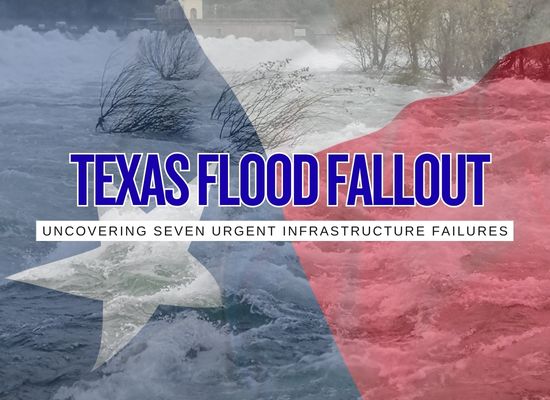
The devastating July 2025 floods across Central Texas didn’t just take lives, they exposed systemic weaknesses in the state’s infrastructure. As rivers rose rapidly and towns like Kerrville, Ingram, and Hunt bore the brunt of nature’s fury, critical systems failed or buckled under pressure. From crippled water treatment facilities to outdated power systems, Texas now faces a wake-up call.
Here are the top infrastructure and water supply challenges currently facing the state, beginning with two of the most urgent and high-impact.
📊 July 2025 Flood by the Numbers
- 💧 22+ feet river surge in 90 minutes: The Guadalupe River in Kerr County rose over 22 feet in less than two hours — catching entire communities off guard.
- 🧍 130+ confirmed deaths: One of the deadliest non-hurricane floods in Texas history, with fatalities concentrated around camps, low-lying homes, and cut-off rural zones.
- 🚫 0 flood sirens in Kerr County: Despite known risk and prior proposals, the region had no functioning siren system at the time of the flood.
- 💸 $60+ million in relief donations: Local organizations like the Hill Country Community Foundation mobilized massive aid campaigns within days.
- 🌪️ 100+ homes swept away: Entire structures, RV parks, and roads were obliterated across the Hill Country, including Hunt and Ingram.
These numbers don’t just highlight the magnitude of the flood, they point to the urgent need for proactive infrastructure, early warning systems, and community resilience across Texas.
1️⃣ Kerrville’s Water Treatment Failure & Stage 4 Emergency
The city of Kerrville, located along the Guadalupe River, is now in a full-scale water crisis after its main water treatment plant was severely damaged during the floods of July 4–5, 2025.
📍 What Happened
- A historic flash flood caused the Guadalupe River to surge over 20 feet within 90 minutes.
- Debris and floodwaters entered Nimitz Lake, damaging the city’s primary surface water treatment intake system.
- The plant was rendered non-operational shortly afterward.
🚨 Consequences
- Stage 4 water restrictions were implemented on July 29, limiting nearly all outdoor water use.
- Residents must now rely on groundwater drawn from the Lower Trinity Aquifer, which is not a sustainable long-term solution for the city’s population.
- Hospitals, nursing homes, and schools are receiving emergency water deliveries via tanker trucks.
⚠️ Key Concerns
- Water quality and pressure may decline if groundwater demand increases.
- Repair costs are expected to be significant, with federal and state funds still pending.
- Officials warn of possible rate increases and long-term conservation mandates.
2️⃣ Power Grid Disruptions & Infrastructure Vulnerabilities
Though less visible than water failures, power system disruptions during the flooding event caused widespread delays in emergency services, water pumping, and communications.
⚡ Floods and the Grid
- Flash floods submerged electrical substations and power junctions, knocking out grid access in several rural areas.
- Temporary loss of power at pump stations and emergency shelters hampered flood response.
- Power-dependent systems such as automated flood alerts, sewage lifts, and water chlorination systems failed or underperformed.
🧱 Why It Matters
- Kerr County and neighboring regions rely on low-elevation, aging infrastructure vulnerable to river surges.
- Many critical systems lack backup generators or elevation protections, meaning they fail during severe flooding.
- Power failures compound crises, turning water outages into public health emergencies and blocking communications.
🔧 What’s Being Proposed
- Texas lawmakers are calling for a statewide infrastructure audit and strategic upgrades, including:
- Elevation of critical assets like water plants and substations.
- Mandatory backup systems for utilities serving flood-prone areas.
- Funding for microgrid pilots that allow localized energy independence during disasters.
3️⃣ Lack of Flood Warning Systems and Sirens
During the July 2025 floods, many residents in Kerr County had no idea the river was rising until it was too late. The area had no flood sirens, and the alert systems in place failed to reach large portions of the population.
📡 What happened
- Kerr County relied on the CodeRED opt-in alert system, which missed many residents during the early morning hours.
- The federal IPAWS system was not activated locally, despite being available.
- Nearby counties like Kendall and Comal had automated sirens tied to river sensors and recorded zero fatalities.
⚠️ Importance
- Dozens of lives were lost in areas with no audible warnings, including campers at Camp Mystic.
- Proposals for flood sirens had been discussed in Kerr County but were not funded or prioritized.
- The incident has triggered state-level investigations into emergency preparedness and warning protocols.
❗ Key concerns
- Without a layered alert system, rural communities remain at risk.
- Cell phone-based systems are unreliable in areas with poor coverage or during overnight events.
- Trust in local emergency systems has eroded following the disaster.
4️⃣ Damaged Roads, Bridges, and Utility Corridors
The floods didn’t just damage homes—they wiped out the physical lifelines that connect entire communities. Roads were destroyed, bridges collapsed, and underground utilities were torn apart.
🧱 What happened
- Roads across Kerrville, Ingram, and surrounding towns were washed away or severely damaged.
- Several bridges failed under the pressure of fast-moving floodwaters.
- Utility lines, including water, sewage, and electrical systems, were damaged or exposed across multiple areas.
📍 Importance
- Rescue efforts were delayed due to impassable roads and collapsed bridges.
- Damage to water and power systems created new crises in the days following the flood.
- The cost and timeline to repair these systems are expected to be substantial.
🚧 Key concerns
- Many of the damaged structures were known to be vulnerable to flooding.
- Rebuilding efforts will need to include elevation, reinforcement, and new design standards.
- Local budgets are stretched, and federal assistance will be essential for recovery.
5️⃣ Volunteer & Rescue Team Fatigue 😓
Search and rescue operations in Kerr County quickly stretched beyond local capacity as teams battled heat, rain, and emotional exhaustion in the wake of July’s flash flooding.
👥 What happened
- Over 2,000 volunteers and emergency personnel were deployed across Kerr County, with many working sustained shifts in extreme heat and intermittent flood conditions.
- Volunteer operations were temporarily suspended when renewed flash flood warnings forced all untrained personnel to stand down.
- Reports describe search teams working without rest, some using on-site IV hydration to stay active in exhausting conditions.
🚨 Importance
- Fatigued teams risk physical injury and diminished effectiveness in locating survivors.
- Suspension of volunteer efforts created logistical challenges, slowing progress in key areas.
- Public safety leaders are now debating how to better train, support, and rotate volunteers in future disasters.
⚠️ Key concerns
- Lack of formal protocols for volunteer fatigue management exposed vulnerabilities in emergency response.
- Reliance on untrained volunteers during rapidly unfolding disasters increases risk.
- Emergency agencies must consider implementing mandatory rest cycles and volunteer wellness protocols.
6️⃣ Financial Strain on Local Water Utilities 💸
Repairing flood-damaged infrastructure and balancing limited resources is pressuring Kerrville’s municipalities and public utilities like never before.
💰 What happened
- Kerrville’s water treatment plant remains inoperable, triggering a Stage 4 water emergency and reliance on limited groundwater reserves.
- The city council is considering an 8% temporary property tax increase to fund recovery efforts—as allowed under Texas law in declared disaster situations.
- Damage estimates to city property—including roads, parks, and utility systems—range from $3 million to $11 million, not including recovery costs borne by individual households.
📊 Importance
- Utilities face a dual crisis: restoring critical services while managing depleted revenue streams due to the flood.
- Tax increases are politically sensitive, particularly as many residents face personal losses and financial strain.
- FEMA reimbursements may take up to 18 months and are unlikely to cover all expenses, pushing local governments to find funding elsewhere.
💡 Key concerns
- Smaller water providers in surrounding areas may risk insolvency without federal or state aid.
- Repair costs and delayed revenue may result in rate hikes for consumers.
- Infrastructure resilience planning must consider both funding mechanisms and risk mitigation strategies.
7️⃣ Rising Calls for a Regional Infrastructure Resilience Strategy 🌍
The scale of destruction and loss is fueling urgent demands for a comprehensive flood-resilience plan covering utilities, warning systems, and critical corridors.
🔍 What happened
- A special legislative session convened in late July to address the disaster’s aftermath, focusing on how state and local agencies can work together to prevent future failures.
- Lawmakers criticized the Upper Guadalupe River Authority for rejecting flood warning system upgrades that were federally fundable. Reserves were diverted to other projects.
- Groups like the Hill Country Community Foundation have mobilized over $60 million in flood donations, supporting relief and long-term recovery.
📌 Importance
- Post-crisis analysis has revealed policy decisions—like not installing warning systems—that amplified the human toll.
- Residents and officials are now demanding state-supported design standards for elevated utilities, microgrids, and flood sensors.
- The flood has created a rare policy window: communities are now more receptive to resilience investments.
🧭 Key concerns
- Infrastructure recovery must go beyond rebuilding, it should prioritize future-proofing against repeated flooding.
- Responsibility for disaster preparedness is unclear, with city and county officials disputing who is accountable.
- Funding allocation needs transparent oversight to ensure systems are built right, not just rebuilt.
🌊 Resilience Starts Now
These seven challenges are more than setbacks, they’re signals. From siren systems to water infrastructure and volunteer coordination, Texas has an opportunity to rebuild stronger. The next flood may arrive faster, hit harder, or last longer. What communities do now will define how they weather what comes next.
Official Resources & Further Reading
City of Kerrville & Kerr County Emergency Management
For updates on Stage 4 water restrictions, recovery efforts, and emergency planning:
🔗 https://www.kerrvilletx.gov
Texas Water Development Board – State Flood Plan
Statewide strategy for flood risk reduction, mitigation funding, and regional planning:
🔗 https://www.twdb.texas.gov
Texas Integrated Flooding Framework (TIFF)
Flood resilience planning tools, risk data, and local coordination resources:
🔗 https://tiff.texasflood.org
Texas Division of Emergency Management (TDEM)
Disaster preparedness, response programs, and emergency resource coordination:
🔗 https://tdem.texas.gov
FEMA Texas Portal (Region 6)
Disaster assistance, flood map tools, and FEMA recovery support for Texas:
🔗 https://www.fema.gov