
Here’s a simple truth: when water starts creeping up the driveway, you will not have time to shop. The fastest wins come from the stuff already in your closets and garage. Use what you have, use it smart, and buy time for the big decisions.
🧰 1) Contractor Trash Bags + Duct Tape
Heavy-duty bags (3–6 mil) and a roll of tape become waterproof skins, quick gaskets, and emergency dry storage in minutes.
- Creates improvised dry-bags for documents, meds, phones, and chargers.
- Makes quick splash guards for low vents, dryer gaps, and weep-prone seams.
- Lines totes and backpacks to keep supplies dry during evacuations.
- Adds a temporary gasket behind sandbags to reduce seep-through.
- Seal critical papers and small electronics inside a zipper bag, then inside a contractor bag. Twist, fold, and tape the neck.
- For door bottoms, tape a bag as a smooth underlayer, then stack sandbags on top to improve the seal.
- For appliance gaps that could back-splash, tape plastic as a splash shield. Leave enough airflow if the unit is running.
- Line a laundry basket or tote with a bag to carry supplies through rain and standing water.
- Double-bag anything that would be a headache to replace.
- Use short tape strips first to position, then one continuous strip to seal.
- Label bags with a marker so you can find items quickly.
- Do not cover gas appliance intakes or electrical panels.
- Plastic sheeting helps with splash. It is not structural. Do not rely on it to hold back rising water by itself.
🟩 2) Pool Noodles
Light, buoyant foam lengths that turn into door sweeps, hose collars, gear floats, and cable protection right when you need them.
- Creates a compressible door bottom sweep to cut seepage when paired with tape or sandbags.
- Floats extension cord junctions and small tool cases to keep them above shallow water.
- Prevents hose kinks and protects pump discharge lines over rough edges.
- Makes quick bumpers for furniture or appliances you elevate on blocks.
- Slice a lengthwise slit. Press onto a door bottom or threshold. Tape edges to the door to hold the seal.
- Cut short sleeves and slide over pump hoses where they pass doors or window sills to reduce abrasion and leaks.
- Wrap a noodle around cord junctions, then tape closed to keep the connection elevated and visible.
- Use darker colored noodles for outdoor spots so they are easy to see in rain.
- Combine with a contractor bag sleeve to make a smoother water contact surface at door bottoms.
- Mark pump intake and discharge lines with different noodle colors to avoid mix-ups.
- Foam floats gear. It does not make anything waterproof. Keep electrical plugs out of water.
- Do not block exit doors with thick foam if you may need to evacuate quickly.
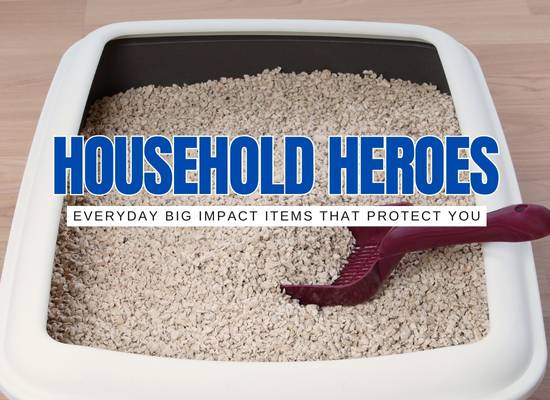
🐾 3) Kitty Litter
That 20-lb bag in the laundry room isn’t just for the cat—it’s traction, absorbent, and odor control when water sneaks indoors.
- Soaks up small puddles or seepage near door frames.
- Adds gritty traction to slick, muddy walkways.
- Neutralizes musty odors if carpets or rugs get damp.
- Helps stabilize sandbags when poured inside as filler in a pinch.
- Spread a thin layer on tile or concrete floors to dry up seepage overnight.
- Pour directly on porches, steps, or garages for extra grip in muddy water.
- Fill heavy-duty bags halfway with litter and tie them—instant mini flood sacks.
- Stick with plain clay litter for better absorption. Clumping types turn mushy.
- Keep a dustpan handy—wet litter gets heavy fast.
- Do not pour wet litter into plumbing—it will clog hard.
- Dispose of used litter in sealed bags; floodwater may contaminate it.
✨ 4) Aluminum Foil
Not just for the kitchen—foil bends, layers, and shields. It becomes a water-resistant surface, light reflector, and emergency patch in seconds.
- Wraps around table or chair legs to keep moisture from wicking up.
- Acts as a disposable drip tray under leaks or soggy storage bins.
- Reflects light when paired with a flashlight in a darkened house.
- Forms a quick splash shield over electronics or breaker boxes (without sealing them shut).
- Tear off wide sheets and double-layer for strength against drips.
- Wrap foil around furniture legs before placing on blocks—prevents capillary soaking.
- Line small boxes with foil to create temporary dry storage for tools.
- Shiny side reflects light best—point it toward a lantern or flashlight.
- Combine foil with tape to form rigid splash guards around outlets low on walls.
- Never wrap foil directly around live electrical wires or outlets.
- Do not block airflow on appliances—foil can trap heat.
🥄 5) Baking Soda
A pantry staple that pulls double duty as a deodorizer, mild cleaner, and even a way to tame mold and mildew after floodwaters recede.
- Absorbs moisture and odor from carpets, rugs, and upholstery.
- Acts as a mild scrub to clean mud off walls and counters.
- Helps reduce mildew smell in damp closets or cabinets.
- Can be sprinkled into shoes or boots to freshen them after wet use.
- Scatter lightly on damp rugs, let sit overnight, then vacuum when dry.
- Mix with a little water to form a paste for scrubbing hard surfaces.
- Place open boxes in closets or pantries to reduce lingering damp smells.
📦 6) Plastic Storage Totes
That stack of bins in the garage becomes instant waterproof storage and even a way to elevate valuables above rising water.
- Protects documents, clothing, and supplies from splash and seepage.
- Creates a quick “platform” when stacked under furniture or appliances.
- Doubles as dry transport containers if you need to evacuate.
- Seal totes with duct tape if lids are loose—extra insurance against leaks.
- Stack them under electronics or furniture legs to gain a few crucial inches.
- Load emergency kits into one tote so you can grab-and-go.
🛏️ 7) Towels & Blankets
Beyond comfort, these fabric basics become absorbent barriers, padding for raised furniture, and insulation in damp conditions.
- Absorbs seepage at thresholds until you can reinforce with sandbags.
- Pads items stacked on blocks or totes to prevent slipping.
- Keeps you warm if the power is out and everything is damp.
- Roll towels tightly and press against doors or low windows as temporary draft and water stops.
- Wrap damp blankets in contractor bags for emergency insulation that stays drier longer.
- Layer towels under electronics or valuables placed on counters to wick stray drips.
When I put this list together, I realized just how many small, ordinary things around the house can make a huge difference when the water starts creeping in. We’ve used more than a few of these ourselves during bad weather, and every time it reminded me that preparation doesn’t always mean expensive gear, it’s about thinking ahead with what you already have. It’s the little hacks that often buy you the most time.