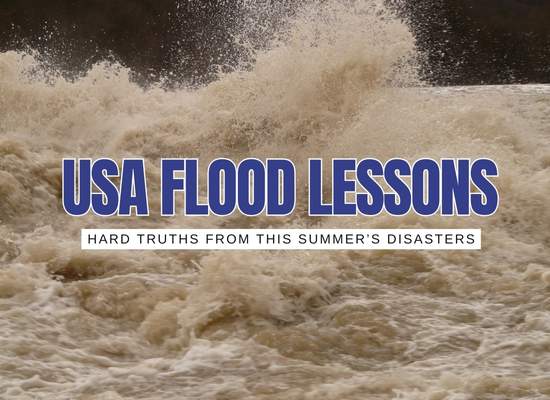
This summer’s floods didn’t just soak neighborhoods, they exposed the cracks in how we prepare, respond, and recover. Streets became rivers in minutes, homes outside official flood zones were overwhelmed, and critical services collapsed under pressure. These disasters left behind more than damage; they left lessons we can’t afford to ignore.
#1 Storms are dumping more water, faster
Short, intense cloudbursts overwhelmed drains and creeks. Multi-inch hourly rates turned routine storms into flash events. Slow-moving systems compounded totals over the same ground.
Patterns we Saw
- Flash floods arrive with little usable lead time.
- “Design storms” used for drains are often outdated.
- Backyard swales and small creeks rise fastest overnight.
What to do now
- Use hyperlocal alerts and radar, not citywide forecasts only.
- Clear curb inlets before storms. Keep a rake by the door.
- Walk your water path. Note where water pools and enters.
Signals to watch
#2 Urban drainage can’t keep up
Stormwater systems in many U.S. cities were built decades ago for rainfall patterns that no longer apply. Add clogged grates, aging culverts, and more pavement, and even moderate storms now back up streets and basements.
Patterns we saw
- Neighborhood streets turned into fast channels.
- Basement flooding where sewers backed up.
- Low-lying intersections became impassable in minutes.
Steps that help locally
- Clear storm drains and curb inlets before rain.
- Add backflow valves in older homes to block sewage.
- Use rain gardens or permeable pavers to ease runoff.
#3 Most flood deaths happen in vehicles
Repeatedly this summer, rescues centered on cars swept from low crossings or trapped in underpasses. Drivers often underestimated depth or speed, especially at night when visibility was low.
Observed risks
- Underpasses filled quickly and trapped vehicles.
- Drivers misjudged shallow-looking water depth.
- Nighttime storms reduced awareness of rising creeks.
Protective actions
- Never drive through moving water, no matter how shallow.
- Know alternate routes that avoid low crossings.
- Wait for water to recede before attempting passage.
#4 Insurance gaps outside mapped flood zones
Many neighborhoods hit this summer were far from FEMA high-risk flood maps. Standard homeowners policies exclude flood, leaving families without coverage when water entered basements and first floors.
What surfaced
- Floods struck blocks never required to buy coverage.
- Families assumed homeowners insurance included water damage.
- Claim delays where inventories were not documented.
Ways to prepare
- Check FEMA maps but assume risk extends beyond them.
- Consider NFIP or private flood coverage even if optional.
- Keep a digital inventory of belongings for faster claims.
#5 Infrastructure failures cascade quickly
Floodwater knocked out power, telecom, and water systems in multiple towns this summer. Once one service failed, others followed, slowing emergency response and stretching recovery timelines for homes and small businesses.
What failed first
- Substations and transformers flooded, causing prolonged outages.
- Lift stations backed up, triggering sewer overflows.
- Cell towers and fiber huts lost backup power.
- Road washouts blocked access to hospitals and shelters.
How to reduce the ripple
- Store potable water and chargers; keep a battery radio.
- Map two evacuation routes that avoid low bridges.
- Photograph utility shutoffs; label main breakers and gas valves.
- For businesses: offsite backups and a simple continuity plan.
We’ve seen how one summer’s worth of storms can reshape entire communities. From overwhelmed drains to stranded vehicles and insurance gaps, each disaster has reminded us that floods don’t wait for perfect conditions. We’ve learned that preparation isn’t only a city’s job, it’s something we can all do at the household level. And while we can’t control the rain, we can control how ready we are when it comes.